
I’m thrilled to have you here! Before we dive into the content, let’s stay connected. Join me on my social media platforms for more insights, community engagement, and regular updates. Here’s where you can find me:
📌 Facebook: Shandong Huaying International Trade Co., Ltd.
Now, let’s embark on this journey together. I hope you find the content here not only insightful and engaging but also valuable to your interests. Let’s learn, grow, and connect!
Table of Contents
Introduction

In the realm of construction, landscaping, and various other industries, the choice of equipment can significantly impact the success and efficiency of projects. Among the many types of loaders available, the 4 wheel steer loader stands out as a remarkable piece of machinery. This blog aims to delve into the five unbeatable advantages that a 4 wheel steer loader brings to your projects, providing you with a comprehensive understanding of why it might be the ideal choice for your specific needs.
Advantage 1: Superior Maneuverability
Enhanced Turning Radius
One of the most notable advantages of a 4 wheel steer loader is its superior maneuverability, primarily due to its enhanced turning radius. Unlike traditional loaders, which may have limitations in tight spaces, a 4 wheel steer loader can make sharp turns with ease. This is particularly beneficial in construction sites where space is often restricted, such as urban areas or indoor construction projects. For example, in a building renovation project where the loader needs to navigate through narrow hallways or around existing structures, the ability to make tight turns allows for more efficient operation and reduces the risk of damage to the surrounding environment.
All – Wheel Steering Modes
4 wheel steer loaders typically offer multiple steering modes, including all – wheel steering. This feature provides even greater flexibility in maneuvering. In all – wheel steering mode, all four wheels can be steered simultaneously, allowing the loader to move in a crab – like motion. This is extremely useful when aligning the loader with a specific target, such as a truck bed for loading or a precise excavation point. It also enables the loader to move diagonally, which can be a significant advantage in situations where straight – line movement is not possible or efficient.
Improved Accessibility
The superior maneuverability of a 4 wheel steer loader translates into improved accessibility. It can reach areas that are difficult or impossible for other types of loaders to access. This is especially important in projects where materials need to be transported to remote or hard – to – reach locations. For instance, in a landscaping project on a hilly terrain, a 4 wheel steer loader can easily navigate up and down slopes and around obstacles, ensuring that materials such as soil, gravel, and plants can be delivered to the exact location where they are needed.
Advantage 2: High Load – Carrying Capacity
Robust Design
A 4 wheel steer loader is designed with a robust structure to handle heavy loads. The frame and components are engineered to withstand the stress and strain of carrying large amounts of material. This allows the loader to carry heavier loads compared to some other types of loaders of similar size. For example, in a construction project where large quantities of building materials need to be moved, a 4 wheel steer loader can transport more bricks, concrete blocks, or steel beams in a single trip, reducing the number of trips required and increasing overall productivity.
Efficient Hydraulic Systems
The high load – carrying capacity of a 4 wheel steer loader is also supported by its efficient hydraulic systems. These systems are responsible for lifting and lowering the loader’s bucket or other attachments. A well – designed hydraulic system can generate sufficient force to lift heavy loads quickly and smoothly. This not only improves the loader’s performance but also reduces the wear and tear on the components, ensuring a longer lifespan for the machine.
Versatile Attachments
In addition to its ability to carry heavy loads, a 4 wheel steer loader can be equipped with a variety of attachments. These attachments can further enhance its load – carrying capacity and functionality. For example, a large – capacity bucket can be used to carry more material, while a fork attachment can be used to handle pallets of goods. The ability to switch between different attachments easily makes the 4 wheel steer loader a versatile tool for a wide range of projects.
Comparison Table
| Feature | 4 Wheel Steer Loader | Traditional Loader |
|---|---|---|
| Turning Radius | Smaller, allowing for sharp turns | Larger, may have limitations in tight spaces |
| Steering Modes | Multiple, including all – wheel steering | Limited steering options |
| Load – Carrying Capacity | High, can handle heavy loads | Varies, may be lower in some cases |
| Accessibility | Can reach difficult – to – access areas | May have difficulty accessing certain locations |
| Versatility | Can be equipped with various attachments | Limited attachment options in some models |
Advantage 3: Excellent Stability
Low Center of Gravity
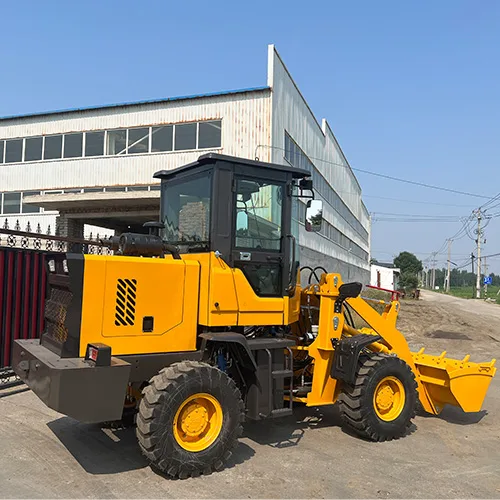
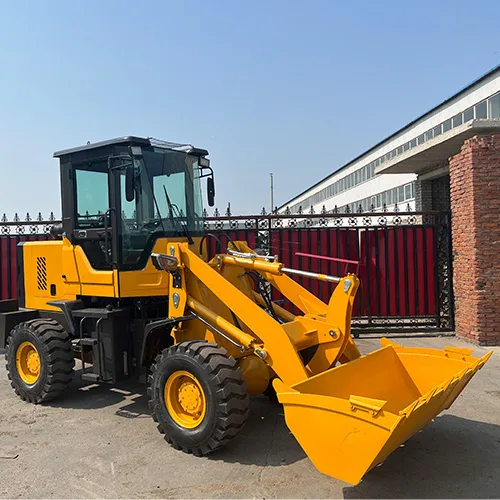
A 4 wheel steer loader typically has a low center of gravity, which contributes to its excellent stability. This is important when carrying heavy loads, especially on uneven terrain. A low center of gravity reduces the risk of the loader tipping over, ensuring the safety of the operator and the integrity of the load. For example, when working on a sloped surface, the low center of gravity helps the loader maintain its balance and prevents it from sliding or toppling.
Wide Wheelbase
The wide wheelbase of a 4 wheel steer loader also enhances its stability. A wider wheelbase provides a larger base of support, making the loader more resistant to lateral forces. This is particularly beneficial when the loader is making turns or operating in windy conditions. It allows the loader to maintain its stability even when subjected to external forces that could otherwise cause it to lose balance.
Advanced Suspension Systems
Many 4 wheel steer loaders are equipped with advanced suspension systems. These systems help to absorb shocks and vibrations, further improving the stability of the loader. They also provide a smoother ride for the operator, reducing fatigue and increasing comfort during long – hours of operation. The advanced suspension systems can adapt to different terrains, ensuring that the loader remains stable and performs optimally in various working conditions.
Advantage 4: Increased Productivity
Faster Operation
The combination of superior maneuverability, high load – carrying capacity, and excellent stability allows a 4 wheel steer loader to operate at a faster pace. It can complete tasks more quickly compared to other types of loaders. For example, in a loading and unloading operation, the ability to make quick turns and carry heavy loads means that the loader can move more material in less time. This increased speed of operation directly translates into higher productivity on the project site.
Reduced Downtime
4 wheel steer loaders are generally more reliable and require less maintenance compared to some other types of loaders. Their robust design and high – quality components contribute to their durability. This means less downtime for repairs and maintenance, allowing the loader to be in operation for a greater percentage of the time. In a project where time is of the essence, reduced downtime can have a significant impact on the overall project schedule and cost.
Operator Comfort and Efficiency
The design of a 4 wheel steer loader also takes into account the comfort and efficiency of the operator. A comfortable operator is a more productive operator. The cab of a 4 wheel steer loader is often equipped with ergonomic controls, adjustable seats, and good visibility. These features make it easier for the operator to control the loader and perform tasks accurately. The reduced fatigue and increased comfort also allow the operator to work for longer periods without a significant decrease in performance.
Advantage 5: Versatility in Applications
Multiple Industries
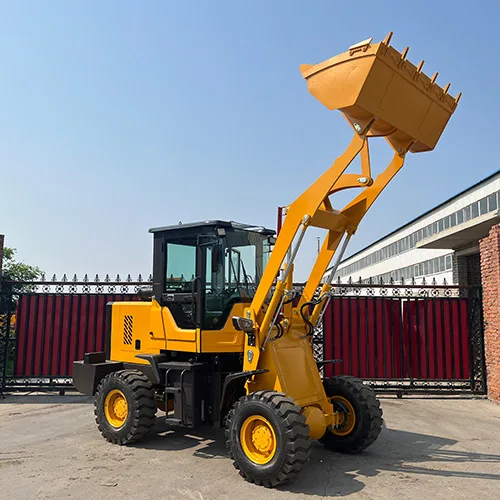
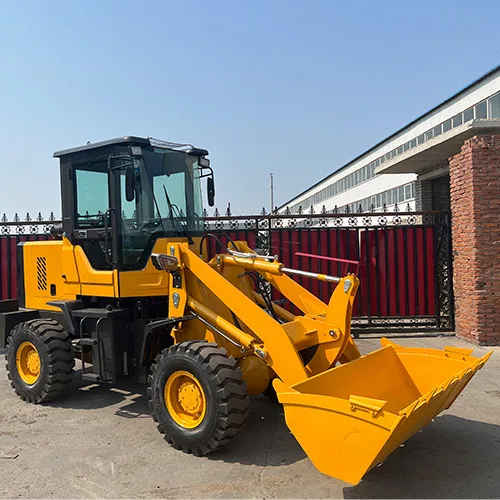
A 4 wheel steer loader is a versatile piece of equipment that can be used in a wide range of industries. In the construction industry, it can be used for tasks such as excavation, loading, and material handling. In the landscaping industry, it can be used for grading, moving soil, and transporting plants. In the agriculture industry, it can be used for tasks such as moving hay bales, loading grain, and cleaning barns. The ability to adapt to different industries makes the 4 wheel steer loader a valuable asset for businesses that operate in multiple sectors.
Various Attachments
As mentioned earlier, a 4 wheel steer loader can be equipped with a variety of attachments. This further enhances its versatility in applications. Different attachments can be used for different tasks, allowing the loader to perform a wide range of functions. For example, a bucket attachment can be used for general loading and excavation, while a fork attachment can be used for handling pallets. Other attachments, such as a snowplow or a sweeper, can be used for specific tasks in different seasons or environments.
Customization Options
Many manufacturers offer customization options for 4 wheel steer loaders. This allows businesses to tailor the loader to their specific needs. For example, the loader can be customized with different engine sizes, hydraulic systems, or cab features. Customization options ensure that the loader is optimized for the specific tasks and working conditions of the project, further increasing its versatility and effectiveness.
Conclusion
In conclusion, a 4 wheel steer loader offers five unbeatable advantages for your projects: superior maneuverability, high load – carrying capacity, excellent stability, increased productivity, and versatility in applications. These advantages make it a valuable asset in a wide range of industries and project types. Whether you are working on a construction site, a landscaping project, or an agricultural operation, a 4 wheel steer loader can help you complete tasks more efficiently, safely, and cost – effectively. When choosing a loader for your project, consider the unique benefits that a 4 wheel steer loader has to offer, and you may find that it is the ideal choice for your specific needs.
FAQ
Q1: How much does a 4 wheel steer loader cost?
A: The cost of a 4 wheel steer loader can vary significantly based on multiple factors. Smaller, entry – level models with basic features may start at around 20,000−20,000−30,000. Mid – range models with more advanced capabilities and better build quality can cost between 30,000−30,000−60,000. High – end, large – capacity 4 wheel steer loaders with the latest technology and a wide range of attachments can exceed 60,000andgoupto60,000andgoupto100,000 or more. It’s advisable to get quotes from multiple dealers and consider the long – term value and performance of the loader when evaluating the cost.
Q2: What types of attachments are available for a 4 wheel steer loader?
A: There is a wide variety of attachments available for a 4 wheel steer loader. Common attachments include buckets of different sizes and shapes for general loading, digging, and grading tasks. Forks can be used for handling pallets and transporting materials like lumber or steel bars. Grapples are useful for picking up and moving irregularly shaped objects such as logs or debris. Snowplows and snow blowers are ideal for winter operations, allowing the loader to clear snow from roads, driveways, and parking lots. Other specialized attachments include augers for drilling holes, sweepers for cleaning large areas, and rippers for breaking up hard ground.
Q3: Is it difficult to operate a 4 wheel steer loader?
A: Operating a 4 wheel steer loader is not overly difficult, especially for those with some experience in operating heavy machinery. Most modern 4 wheel steer loaders are designed with user – friendly controls. The cab is equipped with ergonomic joysticks or levers that are easy to reach and manipulate. However, proper training is essential to ensure safe and efficient operation. Operators need to learn about the different steering modes, how to control the lifting and lowering of the attachments, and how to handle the loader in various working conditions. Training programs are often provided by manufacturers or specialized training institutions.
Q4: Can a 4 wheel steer loader be used in rough terrains?
A: Yes, a 4 wheel steer loader is well – suited for rough terrains. Its all – wheel steering feature provides enhanced maneuverability, allowing it to navigate through uneven ground, slopes, and rocky areas. The robust design and high – quality suspension systems help the loader maintain stability and traction on rough surfaces. Additionally, the large and durable tires are designed to grip the ground firmly, reducing the risk of slippage. However, the performance may vary depending on the specific model and the severity of the terrain. For extremely rough terrains, it may be beneficial to choose a loader with additional features such as high – clearance and heavy – duty tires.
Q5: How does the 4 wheel steer loader compare to a traditional front – wheel steer loader?
A: Compared to a traditional front – wheel steer loader, a 4 wheel steer loader offers superior maneuverability. The ability to steer all four wheels allows for sharper turns and more flexible movement, making it easier to operate in tight spaces. In terms of stability, the 4 wheel steer loader can often handle uneven terrains better due to its all – wheel steering and balanced weight distribution. However, traditional front – wheel steer loaders may be simpler in design and potentially more cost – effective for some basic, large – scale loading tasks where maneuverability is not the primary concern.