
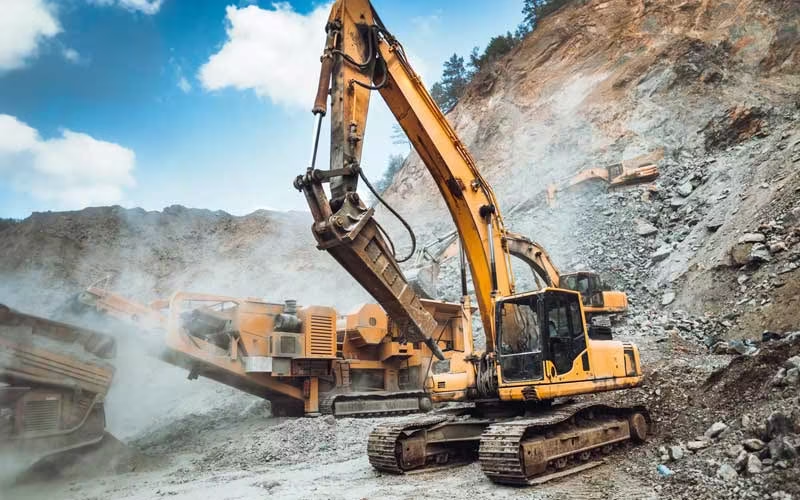
For construction firms and fleet managers, heavy machinery represents a massive capital investment. When projects pause or seasons change, knowing how to store an excavator correctly is the difference between a ready-to-work machine and a costly repair bill. Improper storage leads to “idle damage”—a silent killer of hydraulic systems and engine components.
In this technical breakdown, we analyze the industry standards for how to store an excavator correctly, focusing on biological fuel degradation, electrolytic battery health, and structural oxidation.
Pre-Storage Fluid Management
The first step in how to store an excavator correctly begins with the “lifeblood” of the machine. Stagnant fluids are prone to chemical breakdown and moisture accumulation.
Engine Oil and Filtration
Before shutdown, perform a complete oil change. Used engine oil contains acidic combustion byproducts that can etch bearing surfaces over time. Utilizing excavator engine preservation techniques involves running the engine briefly after an oil change to ensure clean lubricant reaches every internal passage.
- Expert Tip: Always use the manufacturer-recommended viscosity to maintain the protective film on cylinder walls.
Fuel Tank Stabilization
Diesel fuel is hygroscopic, meaning it attracts water. If you want to know how to store an excavator correctly, you must address the risk of microbial growth in the fuel tank.
- Action: Fill the tank to 95% capacity to minimize the “headspace” where condensation forms.
- Additive: Use a high-quality biocide and stabilizer to prevent the formation of “diesel sludge.”
Excavator Cooling System Care
The cooling system is often neglected. Excavator cooling system care requires verifying the freezing point of your coolant. Ensure the mixture is at least 50/50 water-to-antifreeze. According to Caterpillar’s Operation and Maintenance Guidelines, maintaining the correct SCA (Supplemental Coolant Additive) levels is vital to prevent liner pitting during downtime.
Power Systems: Preventing Electrical Decay
Battery failure is the most frequent issue encountered when operators fail to follow protocols on how to store an excavator correctly.
Heavy Equipment Battery Maintenance
Parasitic loads (like the ECU memory or clock) will drain a battery within weeks. Effective heavy equipment battery maintenance dictates that batteries should be physically disconnected or removed entirely.
1.Disconnect the Negative: Always remove the ground cable first.
2.Cleaning: Clean the terminals with a mixture of baking soda and water to neutralize acid corrosion.
3.The Storage Environment: If you are researching the best way to store excavator batteries in cold weather, the answer is a dry, temperature-controlled environment. Avoid placing batteries directly on concrete floors to prevent slow discharge.
Charging Protocols
A discharged battery will freeze and crack in sub-zero temperatures. Keep the voltage above 12.4V by using a smart trickle charger once a month. This is a non-negotiable step in how to store an excavator correctly.
Structural and Hydraulic Protection
Oxidation and seal drying are the primary enemies of a stationary machine. Knowing how to store an excavator correctly means protecting every square inch of exposed metal.
Hydraulic Cylinder Rust Prevention
The chrome plating on hydraulic rods is durable but not invincible. Hydraulic cylinder rust prevention involves retracting all cylinders as much as possible to keep the rods submerged in protective hydraulic oil.
For the portions that remain exposed, apply an anti-rust treatment for exposed excavator hydraulic rods, such as a heavy-duty multi-purpose grease or a specialized vapor corrosion inhibitor (VCI). This prevents pitting that would otherwise shred the seals upon the next startup.
Periodic Dynamic Maintenance
One of the most frequent questions we receive is: how often to start a stored excavator engine? * The Consensus: Start the machine every 15 to 30 days.
- The Logic: Simply idling is not enough. You must cycle the hydraulic functions and travel the machine a few meters to redistribute lubricant on the undercarriage rollers and final drive gears.
Environment and Cabin Care
The cabin environment significantly impacts the longevity of electronics and operator comfort.
Air Conditioning Maintenance for Idle Heavy Machinery
Seals in the HVAC system can dry out and leak refrigerant if left idle. Air conditioning maintenance for idle heavy machinery requires running the AC for at least 5 minutes during your monthly startup cycle. This circulates the lubricant mixed with the refrigerant, keeping the compressor seals supple.
Pest and Moisture Control
- Sealing: Use heavy-duty tape to seal the exhaust pipe and air intake (remember to remove them before starting!). This is a key detail in how to store an excavator correctly to prevent rodents from nesting.
- Upholstery: Place moisture absorbers (silica gel) in the cab to prevent mold growth on the seat and headliner.
Construction Machinery Winterization
If your machine is facing extreme frost, construction machinery winterization becomes the priority. This includes switching to winter-grade “Artic” diesel (to prevent waxing) and checking all rubber components for cold-weather cracking.
Failure to understand how to store an excavator correctly in freezing climates often results in ruptured hoses and cracked engine blocks. Refer to the Komatsu Technical Maintenance Standards for specific thermal threshold data.
Summary Checklist
| Component | Action Required | Frequency |
| Engine | Change oil & stabilize fuel | Pre-Storage |
| Hydraulics | Retract rods & grease exposed tips | Pre-Storage |
| Battery | Disconnect & monthly trickle charge | Monthly |
| Undercarriage | Move machine to rotate rollers | Every 30 Days |
Ultimately, the process of how to store an excavator correctly is about minimizing the variables of decay. By implementing how to prevent excavator engine corrosion during storage and maintaining fluid integrity, you ensure your machine earns its keep the moment the next project begins.
Investing time now in learning how to store an excavator correctly saves thousands in “revival” costs later. According to ISO 12944 Corrosion Protection Standards, the cost of prevention is always a fraction of the cost of remediation.
FAQ
Can I leave the battery in the machine if I turn off the master switch?
It is safer to disconnect the negative terminal. Master switches can sometimes have slight leaks or bypasses that lead to discharge.
What happens if I don’t stabilize the fuel?
Modern diesel can start to degrade in as little as 30 days, forming gums that clog fuel injectors and filters.
Should I lower the bucket to the ground?
Yes. For safety and to relieve pressure on the hydraulic system, always rest the bucket flat on a wooden plank to prevent it from freezing to the ground.
How do I protect the tires/tracks?
If possible, park on a hard, dry surface. For rubber tracks, avoid direct sunlight which causes UV degradation over long periods.