Mini excavator size can decide whether a small construction job feels efficient or expensive. Buy too small, and the machine may struggle with digging depth, hard soil, or lifting. Buy too large, and it may not fit through gates, damage soft ground, or cost more to transport than the job deserves.
This guide helps buyers choose between a 1 ton mini excavator, 2 ton mini excavator, and 3 ton mini excavator for landscaping, trenching, backyard work, small foundations, and tight-access construction.
Table of Contents
Why the right machine is not always the biggest one
The best mini excavator size is the smallest machine that can safely dig, lift, reach, and move on your site. That means weight is only the starting point.
DOZR’s mini excavator spec guide notes that mini excavators are commonly grouped by operating weight, with models generally ranging from about 1 to 11 tons. BigRentz also explains in its mini excavator sizes guide that 1–2 ton machines are compact, while 3–5 ton machines offer more digging capacity for larger small jobs. These industry guides show why buyers should compare jobsite needs instead of choosing by price alone.
Mini Excavator Size Chart for 1 Ton, 2 Ton, and 3 Ton Models
| Machine class | Best for | Typical site | Buyer note |
|---|---|---|---|
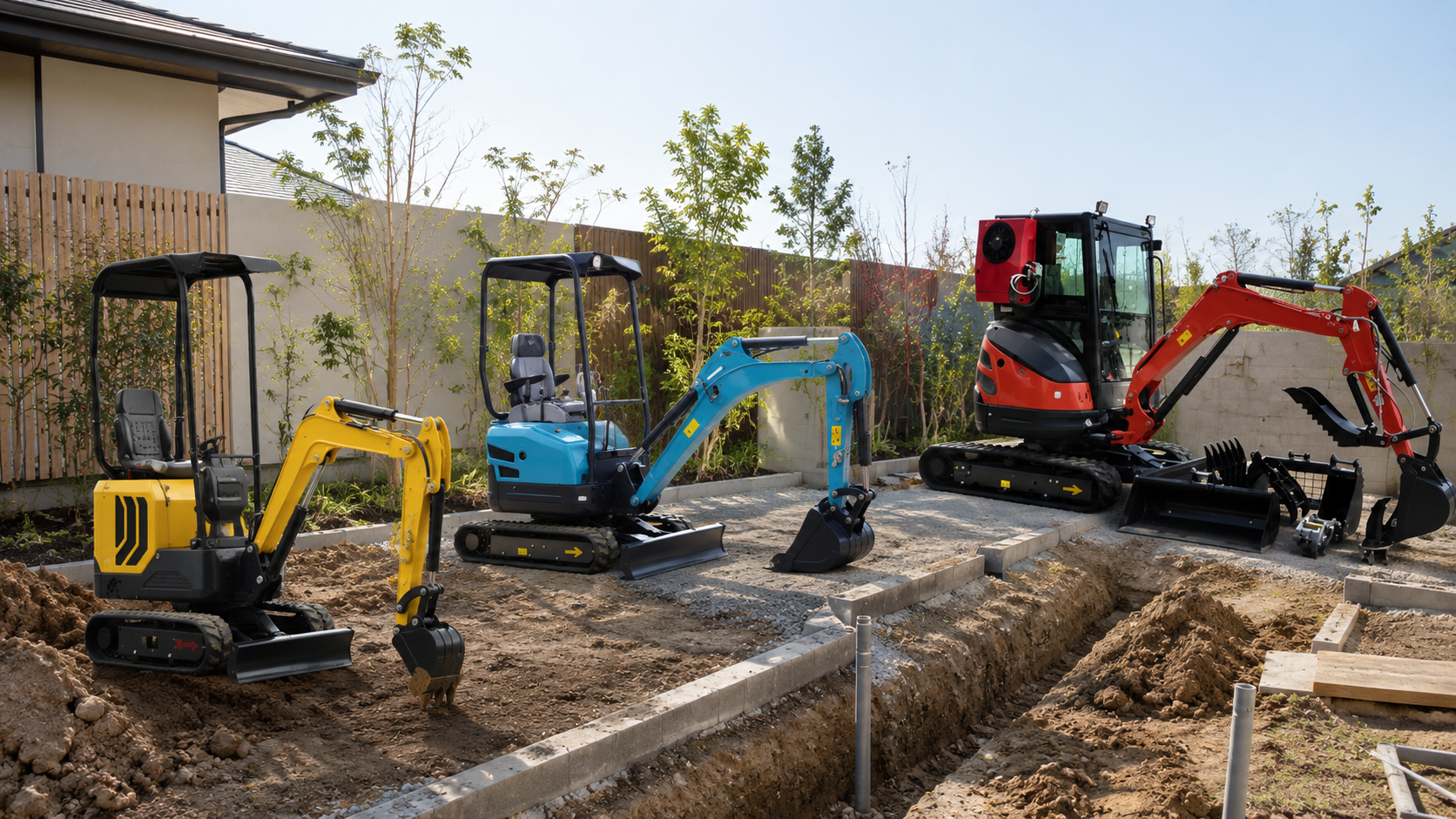
| 1 ton mini excavator | Garden work, backyard digging, light trenching | Narrow gates, tight yards, soft ground | Easy transport, limited depth and lifting |
| 2 ton mini excavator | Landscaping, drainage, utility trenching | Residential and light commercial sites | Best balanced choice for small jobs |
| 3 ton mini excavator | Deeper trenching, tougher soil, small foundations | More open residential or small construction sites | More stability and productivity |
| 3.5 ton mini excavator | Frequent contractor use and heavier attachments | Sites with enough access and turning space | Better output, higher cost |
A 1 ton mini excavator is useful when access is the main limit. A 2 ton mini excavator is often the safest all-round choice. A 3 ton mini excavator becomes more attractive when depth, stability, and productivity matter more than narrow access.
What size mini excavator do I need for small jobs?
The answer depends on the project, not only the machine label.
Choose a 1 ton mini excavator if the job involves backyard access, garden work, shallow drainage, soft soil, greenhouse work, or small farm tasks. It is easy to move and less intimidating for first-time users.
Choose a 2 ton mini excavator if you need a stronger balance of digging force, reach, stability, and compact size. This is often the right choice for small contractors, landscapers, and residential trenching teams.
Choose a 3 ton mini excavator if the work involves deeper trenches, tougher soil, heavier buckets, small foundations, or more frequent jobsite use. It costs more, but it can finish heavier small projects faster.
1 Ton Mini Excavator for tight access and light digging
A 1 ton mini excavator is best when the machine must reach places larger equipment cannot. Think narrow gates, small backyards, orchards, gardens, and light trenching.
Bobcat’s compact excavator size and specification guide explains that buyers should compare weight class, digging depth, reach, and machine size when selecting compact excavators. That is exactly where a 1 ton class machine can make sense for small access-limited jobs.
Its limits are clear. It is not ideal for hard clay, deep trenching, heavy lifting, or large attachments. If the project requires repeated digging in tough ground, the smallest machine may cost more time than it saves.
2 Ton Mini Excavator as the balanced small-job option
A 2 ton mini excavator is often the practical middle ground. It is still compact, but it usually offers better digging depth, stability, hydraulic performance, and operator comfort than a 1 ton model.
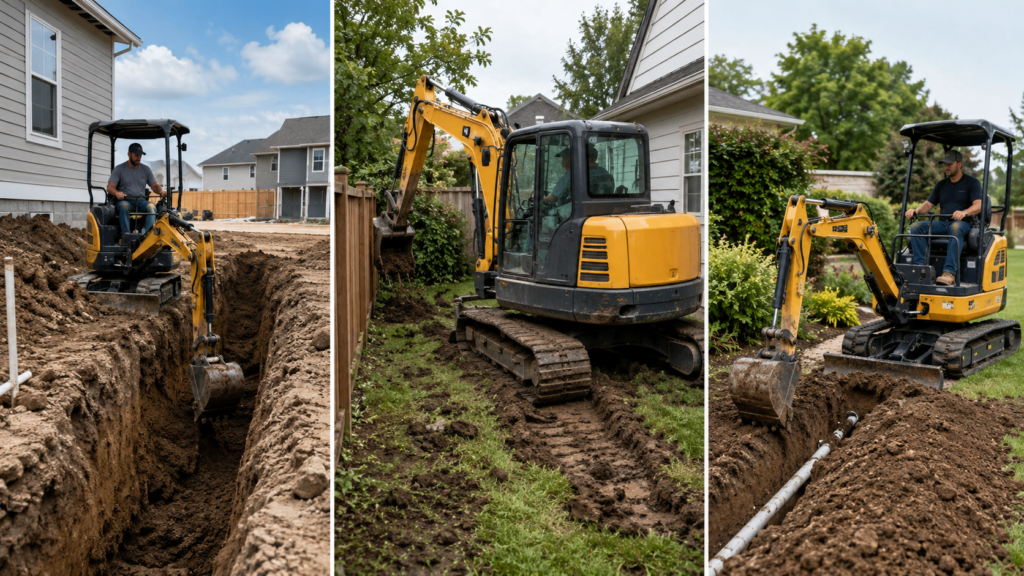
This size works well for residential drainage, utility trenching, landscaping, small farm maintenance, fence lines, light demolition, and small site preparation.
If a buyer asks, “what size mini excavator do I need for mixed small jobs?” the 2 ton class is often the first serious option to compare.
3 Ton Mini Excavator for depth, stability, and productivity
A 3 ton mini excavator is better when the job needs stronger digging performance and more stability. It is useful for deeper trenches, small foundations, retaining wall preparation, light road work, and tougher soil.
The trade-off is access. A 3 ton machine may be too wide or heavy for tight gardens, narrow gates, or delicate lawns.
Best mini excavator size for small jobs by project type
| Project type | Recommended size |
|---|---|
| Backyard landscaping | 1–2 ton |
| Garden trenching | 1 ton |
| Utility trench | 2–3 ton |
| Small foundation | 2–3.5 ton |
| Farm drainage | 1.5–3 ton |
| Fence post and tree planting | 1–2 ton |
| Light demolition | 2–3.5 ton |
| Tight urban work | 1–2 ton |
The best mini excavator size for small jobs is not always fixed. Soil condition, access width, digging depth, attachment choice, and transport limits can change the answer.

Mini Excavator Size Is Not Just Weight
Buyers often compare tons first, but mini excavator size includes more than operating weight.
Check these specifications before choosing:
- machine width
- digging depth
- reach
- tail swing
- bucket capacity
- lifting capacity
- ground pressure
- transport weight
- auxiliary hydraulic flow
- attachment compatibility
When a bigger machine is worth the extra cost
A larger mini excavator size makes sense when the work is frequent, the soil is hard, the trench is deeper, or attachments are part of the job.
Choose a 3 ton or 3.5 ton class when you need more stability, a larger bucket, better reach, or more hydraulic capacity for breakers and augers.
But do not buy bigger only because it looks stronger. If the machine cannot reach the work area, it is the wrong machine.
When a smaller machine is smarter
A smaller mini excavator size is smarter when access, transport, and ground protection matter more than raw digging force.
Choose 1 ton or 2 ton when the project involves narrow residential access, soft lawns, small gardens, lighter digging, or limited trailer capacity. For homeowners, farms, and landscape teams, a compact machine can reduce damage and simplify movement around the site.
Conclusion
Mini excavator size should match the job, not just the budget. For narrow gates and light digging, choose 1 ton. For everyday landscaping and trenching, choose 2 ton. For deeper trenches, tougher soil, and better productivity, choose 3 ton or 3.5 ton.
The right mini excavator size is the machine that can complete the job safely without creating access, transport, or cost problems.
FAQ
What size mini excavator do I need?
For light backyard work, a 1 ton mini excavator may be enough. For landscaping and trenching, a 2 ton mini excavator is usually more balanced. For deeper digging or tougher soil, choose a 3 ton mini excavator.
What is the best mini excavator size for small jobs?
For most small jobs, 1–2 ton machines are easier to transport and operate. If the job needs more depth, lifting, or stability, 2–3 ton is safer.
Should I choose a 1 ton or 2 ton mini excavator?
Choose 1 ton when access and transport are the main limits. Choose 2 ton when you need better reach, digging force, and productivity.
Is a 3 ton mini excavator too big for residential work?
Not always. It can work well for small foundations, deeper trenches, and larger landscaping, but it may be too large for narrow gates or delicate yards.