
When the temperature drops below freezing, the margin for error with compact construction equipment disappears. For owner-operators and fleet managers, the arrival of winter isn’t just about a change in scenery—it is a direct threat to engine health, hydraulic performance, and overall uptime. A machine that isn’t prepared is a liability that leads to expensive emergency repairs and missed project deadlines.
Implementing a rigorous mini excavator winter maintenance routine is the only way to ensure your machine starts every morning and survives the season without structural damage. In this guide, we will break down the technical requirements for cold-weather operation, focusing on fluid chemistry, battery preservation, and the mechanical nuances of the undercarriage. This guide serves as your definitive roadmap for mini excavator winter maintenance in high-latitude regions where temperatures routinely dip into the single digits.
Table of Contents
Managing Fluids and Lubricants in Sub-Zero Temps
The most common failure point during the winter months involves fluid viscosity and chemical stability. As part of your comprehensive mini excavator winter maintenance strategy, you must address the specific needs of your diesel, hydraulic, and cooling systems. Standard fluid checks are the foundation of effective mini excavator winter maintenance, especially regarding viscosity and freezing points.
Standard diesel fuel contains paraffin wax. In warm weather, this remains liquid, but as temperatures hit the “cloud point,” the wax begins to crystallize, clogging fuel filters and starving the engine. To combat this, you should switch to a Grade No. 1-D winter blend or use a high-quality anti-gel additive before the first frost hits.
Equally important is the selection of hydraulic fluid. Most compact machines ship with a multi-viscosity oil like ISO VG 46, but in extreme northern climates, this can become too thick for the pump to move effectively upon startup. Consult your manual for the move to a lower viscosity fluid, such as ISO VG 32, which maintains better flow properties at lower temperatures. You can find detailed viscosity-temperature charts and standards via the International Organization for Standardization (ISO) 11158.
Furthermore, checking the freezing point of your coolant using a refractometer is a critical step in mini excavator winter maintenance. Ensure the glycol-to-water ratio is sufficient (typically 50/50 or 60/40) as per ASTM D3306 standards to prevent the radiator from cracking.
Mastering Cold Weather Starting and Battery Care
If you want to winterize mini excavator units effectively, you have to start with the electrical system. Batteries rely on chemical reactions to produce current, and these reactions slow down significantly in the cold. At 0°F (-18°C), a battery provides only about 40% of its normal cranking power, while the engine requires nearly double the power to turn over due to thickened oil.
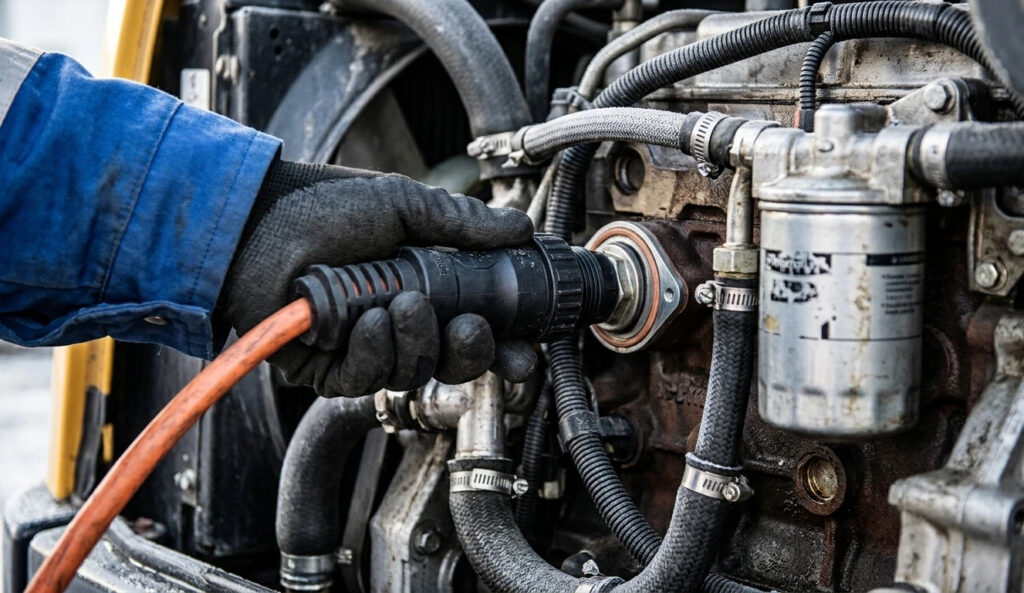
Beyond mechanical components, electrical health is a pillar of comprehensive mini excavator winter maintenance. Cold weather starting depends on two factors: voltage and heat. Always test your battery’s Cold Cranking Amps (CCA) before the season starts. If the battery is more than three years old, replace it. Additionally, utilizing an engine block heater can reduce the “cold-start” wear on your internal components by up to 50%. This keeps the coolant warm, allowing the engine to reach operating temperatures much faster.
When attempting a cold weather starting sequence, always cycle the glow plugs twice if the ambient temperature is extremely low. This ensures the combustion chamber is sufficiently warm for the diesel to ignite on the first or second crank, preventing unnecessary strain on the starter motor.
Precision Winter Track Care and Undercarriage Preservation
The undercarriage represents nearly 50% of a machine’s lifetime maintenance costs. In the winter, this area is particularly vulnerable. Proper mini excavator winter maintenance requires a shift in how you clean and store your machine. Neglecting the undercarriage is a common mistake in mini excavator winter maintenance that leads to high costs and unnecessary downtime.
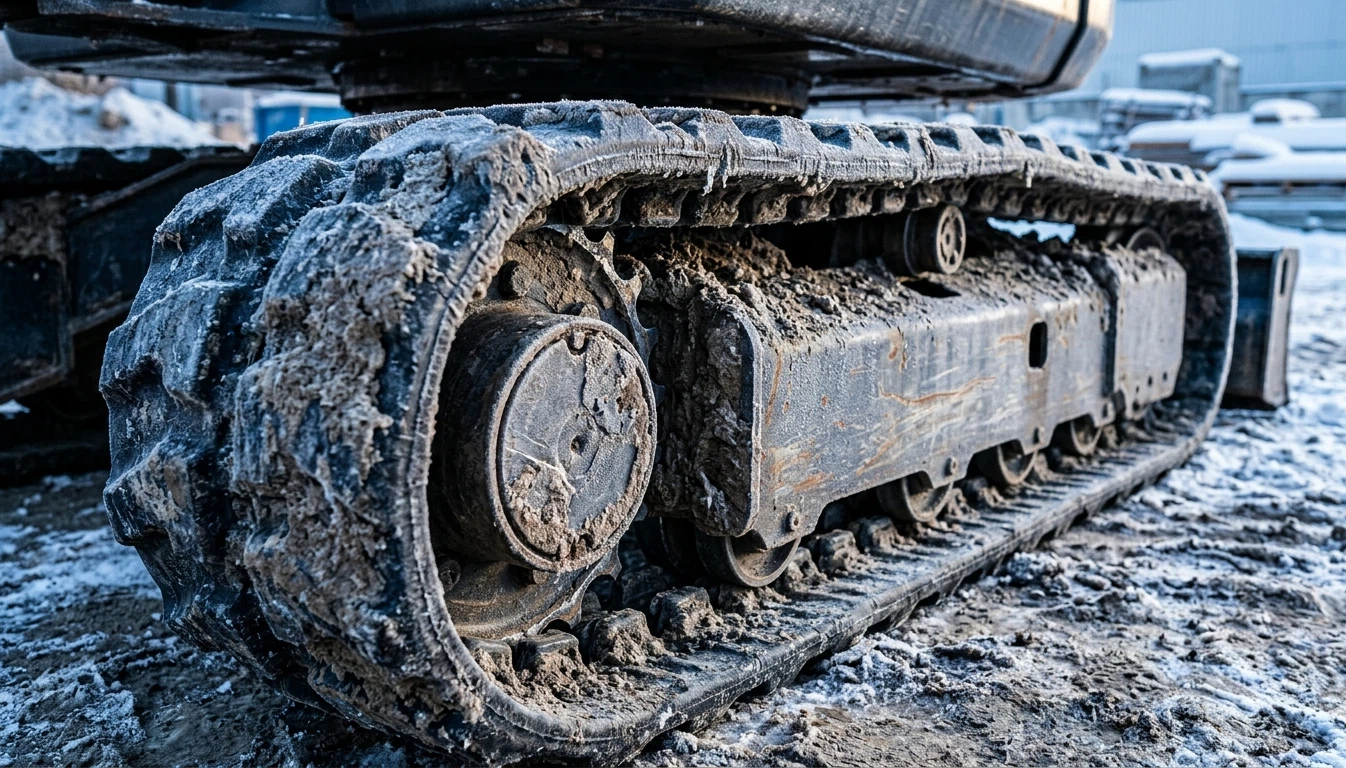
Wet mud, snow, and debris can pack into the rollers and idlers during the day. If left overnight, this mixture freezes into a solid block of “concrete-ice,” which can tear rubber tracks or snap metal links when the machine is forced to move the next morning. Efficient winter track care involves a thorough pressure washing at the end of every shift to remove debris before it freezes.
Furthermore, check your track tension frequently. Cold weather causes rubber to contract, which can alter the tension and lead to de-tracking in deep snow. A slightly looser track is often better in snowy conditions to allow for material build-up, but always stay within the manufacturer’s specified range to avoid premature wear.
Tips for Running a Mini Excavator in the Snow and Cold
Operating a machine is vastly different once the ground is frozen. Safety and machine longevity are the dual goals of a robust mini excavator winter maintenance program. Here are several tips for running a mini excavator in the snow and cold that will protect your hydraulic seals and structural integrity:
1.Warm-up is Non-negotiable: Never go straight to high idle. Allow the engine to idle for 5–10 minutes, then perform 2-3 full cycles of every hydraulic function (arm, bucket, blade, and swing) to circulate warm oil through the entire system.
2.Protect the Rods: When parking for the night, retract all hydraulic cylinders as much as possible. Exposed chrome rods can collect ice and frost, which can tear the sensitive hydraulic seals when the cylinder is retracted back into the housing.
3.Manage Your Grounding: If you are parking on dirt or grass, place the machine on heavy wooden planks. This prevents the tracks from freezing to the ground, a common issue that can damage the drive motors during a forced morning takeoff.
Integrating these mini excavator winter maintenance practices into your daily flow not only keeps you safe on slippery slopes but also prevents the “thermal shock” that causes steel booms to crack under extreme stress.
How to Winterize Mini Excavator Fleets
For machines that will be sitting idle for several months, you must go beyond basic mini excavator winter maintenance. Storing a machine incorrectly can lead to internal corrosion and fuel degradation. If you are responsible for multiple units, creating a standardized checklist is vital for fleet-wide mini excavator winter maintenance success.
First, fill the fuel tank to the brim. A full tank leaves no room for air, which prevents condensation from forming on the tank walls—the primary cause of water in fuel. Second, grease all pivot points until you see fresh grease purging out of the seals. This creates a moisture barrier that prevents rust from forming on pins and bushings.
If you are looking for specific grease standards for low-temperature applications, refer to the Society of Automotive Engineers (SAE) J300 for lubrication guidelines. Proper lubrication is the final, essential step to winterize mini excavator inventory effectively.
Strategic Maintenance for Year-Round Uptime
Consistency is the secret to successful mini excavator winter maintenance. By checking your fluids daily, managing your battery health, and being diligent about winter track care, you turn a potentially destructive season into a productive one. By adhering to this mini excavator winter maintenance checklist, you protect your bottom line and ensure the machine remains a high-value asset.
Remember that a mini excavator is a precision tool. Treating it with the respect the weather demands will ensure it remains a reliable asset for years to come. Whether you are clearing snow or digging frozen footings, these steps are your insurance policy against the cold.
FAQ
How long should I warm up my mini excavator in the winter?
Aim for at least 10–15 minutes. Start with low-idle engine warm-up, followed by slow, full-range movements of the boom, bucket, and blade to warm the hydraulic oil.
Is it okay to use starting fluid (ether) on a mini excavator?
Generally, no. Most modern mini excavators use glow plugs. Using ether while glow plugs are active can cause a pre-detonation explosion that destroys the engine.
How do I stop my fuel from gelling?
Use a winter-blend diesel (No. 1-D) or add a fuel stabilizer/anti-gel treatment before the temperature hits 32°F (0°C). Once it gels, you usually have to tow the machine into a heated garage to thaw it out.
What is the best way to handle winter track care?
Clean the tracks daily and park on wooden planks. This prevents the machine from freezing to the ground and protects the rubber from the damaging effects of ice-expansion within the tread.
Do I need different engine oil for winter?
Usually, yes. Switching to a “winter weight” oil like 5W-40 synthetic provides better flow at startup than a standard 15W-40. Always check your engine manufacturer’s specific oil viscosity chart.