Table of Contents
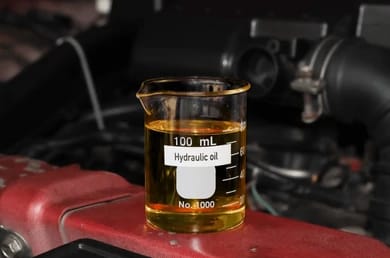
Mini skid steer hydraulic filter replacement is a small procedure with outsized impact on reliability. Regular, correct changes reduce contamination, extend pump life and lower downtime costs for compact equipment fleets.
Mini skid steer hydraulic filter replacement — why it matters
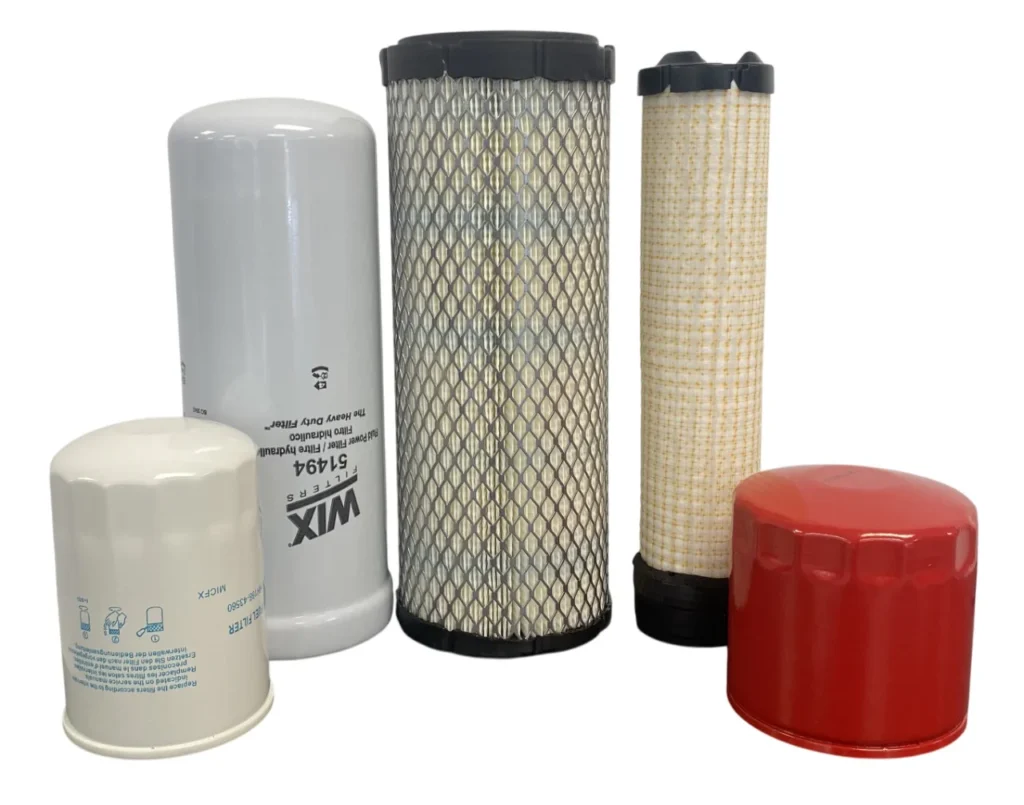
Hydraulic contamination is the leading cause of premature pump and valve failure. A clean filter keeps particles out of sensitive components and preserves hydraulic oil properties. For tight-capacity mini machines, filter performance matters more because small reservoirs concentrate contaminants faster. The general engineering principle is to change the element before the filter reaches ~80% dirt holding capacity to avoid bypassing and contamination ingress.
Mini skid steer hydraulic filter replacement intervals
Manufacturers publish model-specific intervals. For many compact loaders and mini skid steers, service schedules recommend filter checks and replacements commonly at 250–1,000 machine hours depending on duty cycle and environment. Always follow your operator manual for the final recommendation. For example, service schedules and filter charts from Bobcat show model-based intervals and clear service items.
Practical rule of thumb:
- Light, clean-site use → longer intervals.
- Heavy, dusty or high-cycle use (attachments, continuous lifting) → shorten intervals; consider 250–500 hours or condition-based changes.
Mini skid steer hydraulic filter replacement — step-by-step procedure
A safe, repeatable procedure prevents spills and pressure-related accidents. Core steps below are OEM-aligned; adapt to your model.
1.Park on level ground, lower attachments and relieve system pressure.
2.Block and tag machine; wear eye/hand protection.
3.Place drip pan and remove fill cap to equalize tank pressure.
4.Remove the filter housing or cartridge; capture fluid and inspect O-rings.
5.Install new element and new O-ring (light oil coat), torque or hand-tighten per manual.
6.Refill to correct level, purge trapped air via recommended cycles, run and inspect for leaks.
These steps match procedural guidance commonly shown in manufacturer service materials and how-to service articles.
Mini skid steer hydraulic filter replacement — troubleshooting & tips
If you see sudden pressure rise, unusual noises, or elevated system temperature after a change, suspect trapped air, wrong element type, or a case drain issue. Check element orientation and seal seating before re-running.
Use a clean workspace and lint-free rags. Keep a spare element, O-ring kit, and small pump-out pans ready for quick swaps on the job.
Mini skid steer hydraulic filter replacement — selecting filters and fluids
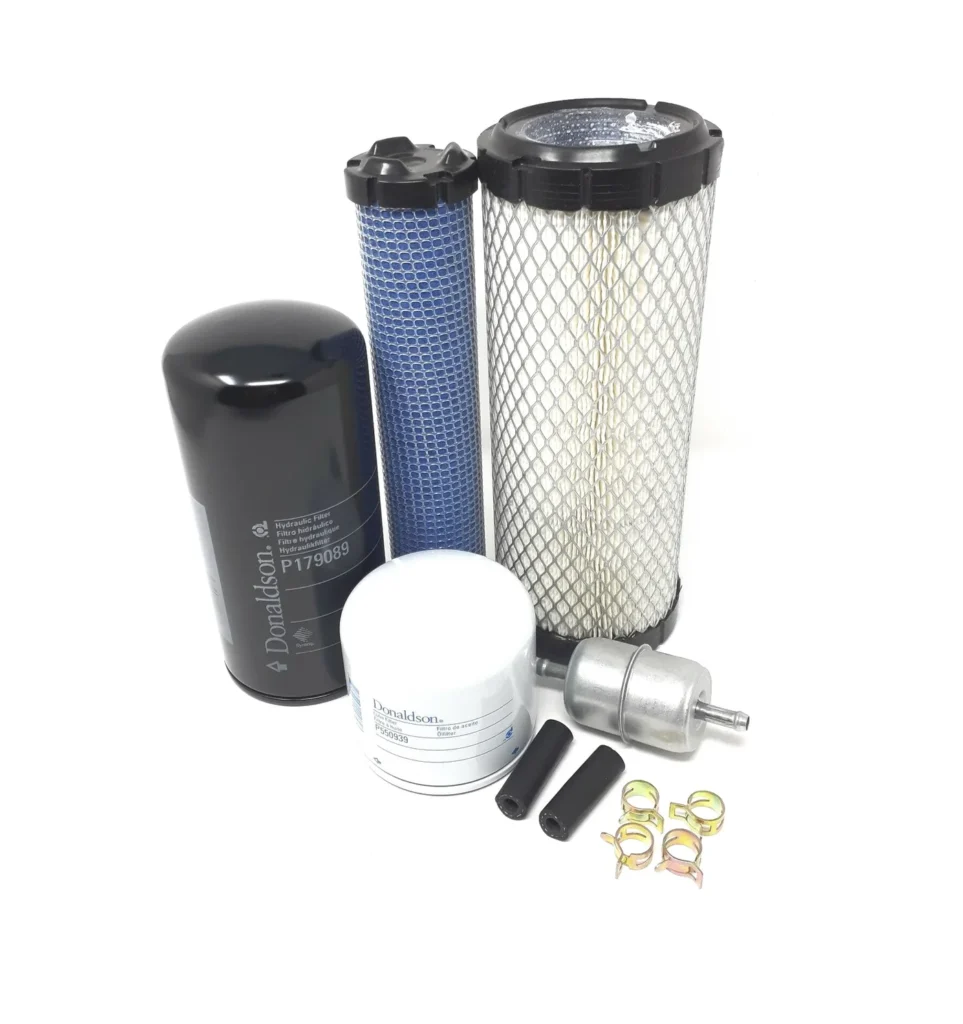
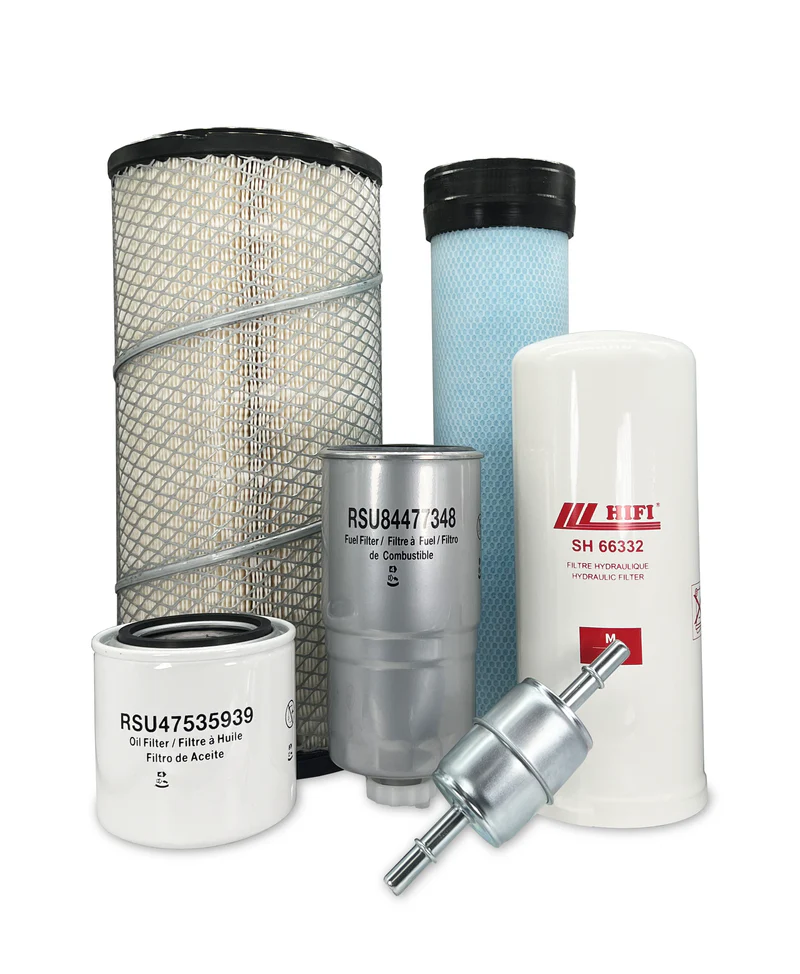
Choose OEM-specified media or equivalent high-efficiency (beta-rated) elements from reputable brands. For machines in abrasive environments, higher-capacity or multi-stage filters extend service intervals.
Match the hydraulic fluid viscosity and specification to the operator manual; a wrong fluid accelerates filter clogging and wear. Filter cross-reference charts from your dealer help confirm compatible alternatives. When in doubt, use OEM parts or an approved aftermarket equivalent to protect warranty and performance.
Condition-based maintenance and monitoring
Consider particle counters, sight glass indicators or pressure-differential gauges for high-value fleets. These tools let you replace filters based on actual contamination level rather than fixed hours, which is often the most cost-effective approach in mixed duty cycles.
Safety and environmental notes
Collect used hydraulic fluid and spent elements for proper disposal. Avoid open spills and use absorbent pads. Follow local hazardous-waste rules and your company’s environmental policy.
Quick checklist
- PPE ready: gloves, eye protection.
- New element + O-ring + drip pan.
- Clean area & proper tools (strap wrench, torque).
- Run-in check: leaks, temperature, system pressure.
Summary
Mini skid steer hydraulic filter replacement is an essential, low-cost maintenance action that protects pumps, valves and seals. Follow OEM intervals, use correct parts, and prefer condition-based monitoring when possible to maximize uptime and equipment life.
For more information, please click here.