
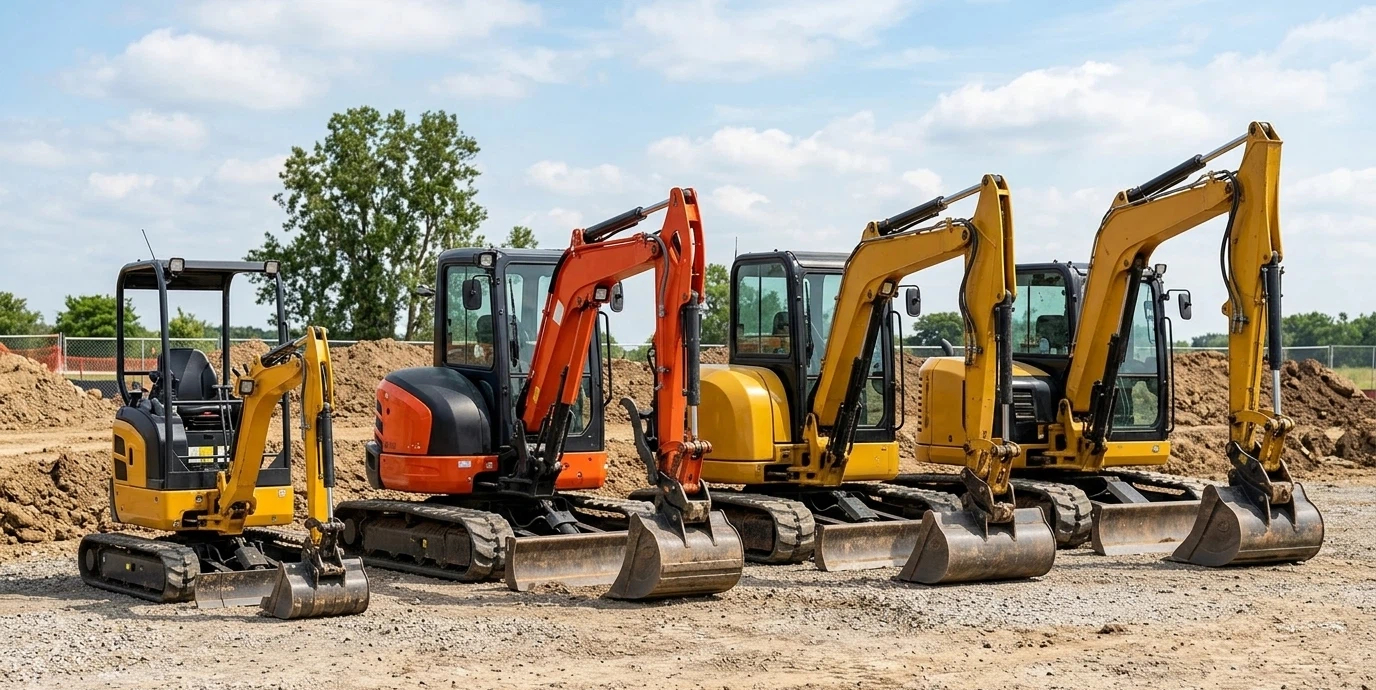
In the world of compact construction equipment, “bigger” is rarely synonymous with “better.” The efficiency of a project often hinges on the surgical precision of the machinery used. Selecting from the various Mini Excavator Sizes available on the market today requires a deep understanding of reach, dig depth, and transport logistics.
Whether you are a landscaping contractor or a utility specialist, the equipment dimensions you deploy will directly impact your overhead costs and project timelines. This guide breaks down the tonnage categories and technical capabilities to help you make an informed investment.
Table of Contents
Defining the Categories of Mini Excavator Sizes
The industry generally classifies Mini excavator sizes by their operating weight, typically ranging from 1 to 10 metric tons. Each weight class is designed for specific mechanical advantages.
The Ultra-Compact Class (1–2 Tons)
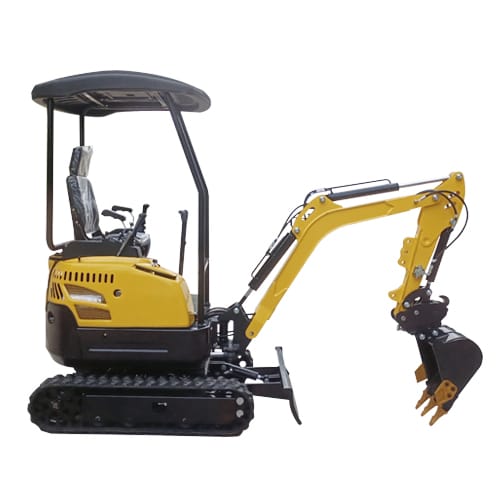
Often referred to as “micro excavators,” these machines are the masters of accessibility. When choosing a mini digger for backyard renovations or indoor plumbing repairs, the 1-ton class is unbeatable. Their retractable tracks allow them to pass through standard doorways and garden gates, making them essential for high-density residential work.
The Versatile Mid-Range (3–5 Tons)
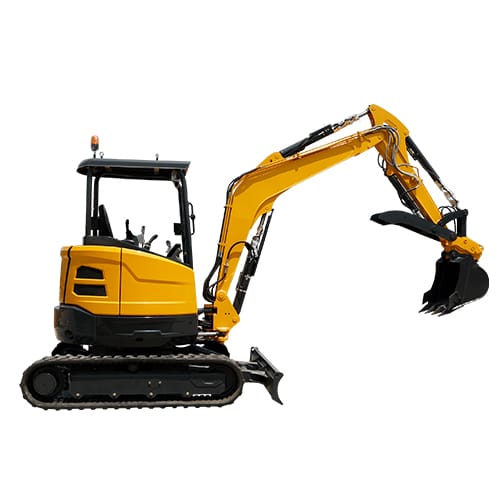
This is the “sweet spot” for many general contractors. Comparing a 1-ton vs 3-ton excavator, the latter offers significantly higher breakout force and lifting capacity without requiring a commercial driver’s license (CDL) for transport in many regions. These specific Mini excavator sizes balance the ability to dig deep trenches with the agility needed to avoid damaging existing structures.
Technical Factors: What Size Mini Excavator Do I Need for My Yard?
Homeowners and DIY enthusiasts frequently ask: “What size mini excavator do I need for my yard?” The answer depends on two primary factors: digging depth and surface pressure.
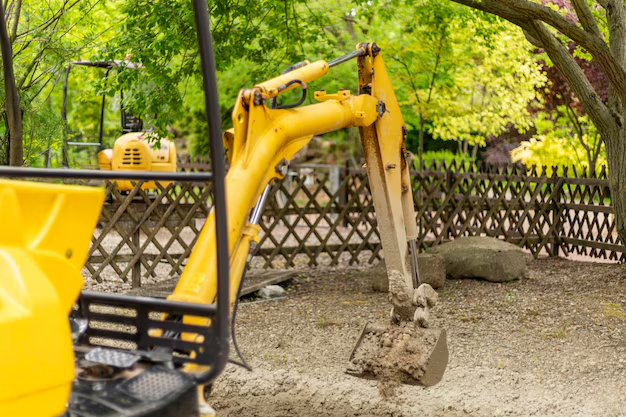
If you are installing a French drain or planting small trees, a 1.5-ton machine is sufficient. However, if your project involves digging a swimming pool or removing large tree stumps, you will need the hydraulic power found in larger units, specifically those in the 4-ton to 5-ton range.
Additionally, consider the ground conditions. Smaller machines exert less ground pressure, which is critical if you are working on established lawns or sensitive landscapes where you want to minimize soil compaction.
Performance Metrics by Weight Class
To simplify the decision-making process, we have categorized the most common Mini excavator sizes by their typical performance capabilities.
Comparison of Standard Mini Excavator Specifications
| Operating Weight | Typical Dig Depth | Best Application | Transport Requirement |
| 1 – 1.5 Tons | 5′ – 7′ | Indoor demo, garden gates | Standard Utility Trailer |
| 2.5 – 3.5 Tons | 8′ – 10′ | Utility trenching, footings | Heavy-duty Pickup + Trailer |
| 4 – 5.5 Tons | 11′ – 13′ | Pool excavation, road work | Medium-duty Truck |
| 6 – 10 Tons | 14’+ | Large-scale drainage, clearing | Commercial Transport |
Logistics and The Ultimate Guide to Towing a Mini Excavator Safely
One of the most overlooked aspects of Mini excavator sizes is the logistics of getting the machine to the job site. The weight of the unit dictates the type of trailer and towing vehicle required.
As outlined in The Ultimate Guide to Towing a Mini Excavator Safely, a 1-ton machine can often be towed by a standard SUV or half-ton pickup. However, as you move up the weight scale, the requirements become more stringent. A 5-ton excavator, for instance, exceeds the towing capacity of most consumer vehicles. You must calculate the combined weight of the machine, the trailer, and any additional attachments to ensure you stay within legal and safe towing limits.
Industry-Specific Applications for Compact Units
Landscaping and Hardscaping
For the modern professional, a landscaping mini excavator is usually in the 1.5 to 3-ton range. These machines provide enough power to move boulders and grade soil while remaining small enough to navigate between trees. They are the backbone of backyard transformations.
Farm and Homestead Management
On the other hand, the best compact excavator for farm and homestead use is typically a 3.5 to 5-ton model. Farmers often need to clear drainage ditches, repair fences, and move heavy hay bales. These tasks require the increased lift capacity and auxiliary hydraulic flow found in these slightly larger Mini excavator sizes.
Emerging Trends: Electric Mini Excavator Sizes
The market is currently seeing a surge in electric mini excavator options, particularly in the 1-ton to 2-ton categories. These battery-powered units offer the same performance as diesel counterparts but with zero emissions and significantly reduced noise levels. While currently limited to smaller Mini excavator sizes, electric technology is rapidly advancing, offering a sustainable solution for indoor construction and urban night work.
Operational Safety: Top 5 Mistakes Beginners Make
Choosing the correct equipment is only half the battle; operating it safely is paramount. Many novices assume that a larger machine is more stable, but improper load management can lead to tip-overs in any size class.
Common errors include:
1.Overextending the boom while carrying a heavy load.
2.Ignoring the weight limits of the specific Mini excavator sizes being used.
3.Working on steep slopes without proper track orientation.
Maximizing ROI Through Proper Sizing
The financial success of a project is tied to your equipment’s “duty cycle.” If you choose Mini excavator sizes that are too small, the machine will struggle, leading to increased fuel consumption and mechanical wear. If the machine is too large, you waste money on transport and fuel for power you aren’t utilizing.
By analyzing your most frequent job types, you can select the Mini excavator sizes that offer the highest utilization rate. Most successful contractors start with a versatile 3-ton unit and rent micro-units or larger conventional excavators only when specific project demands arise.
Conclusion
The evolution of Mini excavator sizes has empowered contractors to take on increasingly complex projects in confined spaces. From the ultra-compact 1-ton units to the powerful 8-ton “midi” excavators, there is a perfect match for every application. By prioritizing transport safety, matching the machine to the industry—whether it’s a farm mini excavator—you ensure long-term profitability.
Always remember that the most effective of all Mini excavator sizes is the one that fits your current job site today while allowing for business growth tomorrow.
FAQ
Can a 1-ton mini excavator dig through clay?
Yes, but it will be slower than larger machines. Ensure the unit is equipped with sharp teeth and use smaller buckets to maximize breakout force.
Do I need a special license to tow a mini excavator?
For smaller Mini excavator sizes (under 10,000 lbs combined trailer weight), a standard driver’s license is usually sufficient in most regions. Always check local DOT regulations.
Which is the best mini excavator for landscaping?
A 2.5 to 3.5-ton model is generally considered the best landscaping mini excavator because it offers a balance of power, reach, and ease of transport.
How deep can a 5-ton mini excavator dig?
Most 5-ton models can reach a dig depth of approximately 11 to 13 feet, depending on the arm configuration.