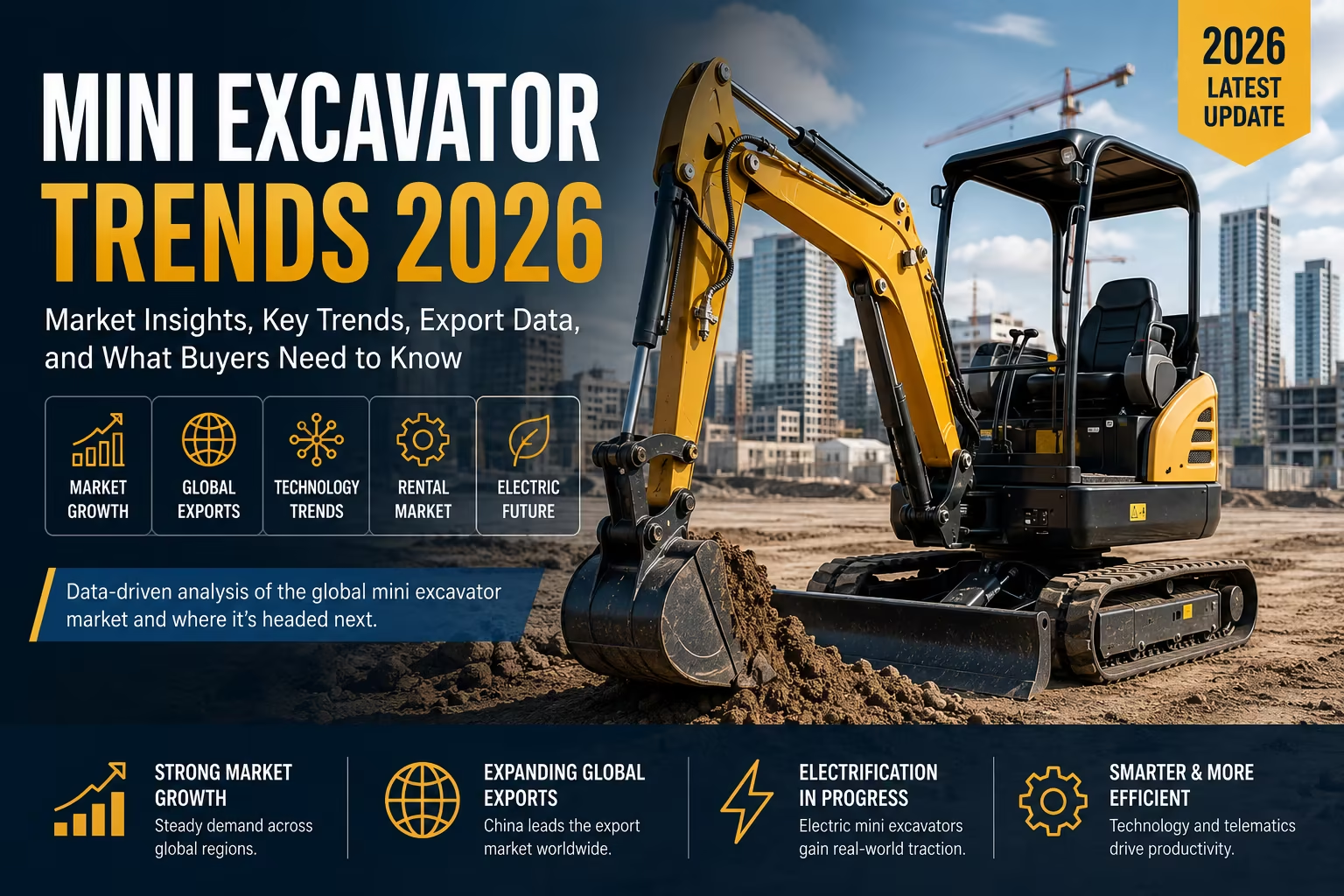
Compact machines are no longer a niche product. The latest mini excavator trends show that demand is expanding far beyond traditional construction sites. Contractors are buying smaller machines to work in tighter urban spaces, rental fleets are replacing aging equipment more frequently, and importers are looking for manufacturers that can balance price, emissions compliance, and after-sales support.
If you’re planning to import mini excavators, expand a rental fleet, or simply understand where the market is heading, this guide brings together the most important market signals. You’ll learn which countries are driving demand, why exports from Asia continue to grow, how electric machines are changing buyer expectations, and what purchasing criteria matter most in 2026.
Instead of repeating market forecasts, we’ll connect industry data with real purchasing decisions so you can understand where the compact excavator market is moving—and why it matters for your business.
Table of Contents
Why Are Mini Excavator Trends Changing Faster Than Other Construction Equipment?
The answer is simple: construction projects are getting smaller while jobsite restrictions are becoming tighter.
Urban redevelopment, underground utility upgrades, residential landscaping, and municipal maintenance all require equipment that can operate efficiently in confined spaces without sacrificing digging performance.
Likewise, the compact construction equipment market has benefited from labor shortages. Contractors increasingly rely on machines that one operator can transport, unload, and operate without requiring large support crews.
Another important factor is equipment ownership costs. Rising fuel prices, transportation expenses, and machine financing rates have encouraged many contractors to choose machines between 1 and 4 tons, creating sustained demand across both developed and emerging markets.
For buyers, this means that mini excavator market trends are no longer driven only by construction volume—they are increasingly influenced by operating efficiency, transportation flexibility, and total lifecycle cost.
According to the Association of Equipment Manufacturers (AEM) analysis of the compact equipment sector, contractors continue shifting toward compact machinery because it offers greater versatility across infrastructure, landscaping, and utility applications:
What Does the Global Mini Excavator Market Look Like in 2026?
Most industry forecasts point in the same direction: steady long-term growth rather than short-term spikes.
Research from Market Research Future estimates continued expansion of the global mini excavator market, supported by infrastructure investment, urbanization, and increased adoption of compact construction equipment across Asia-Pacific and North America.
Rather than replacing larger excavators, mini excavators are filling jobs where accessibility, lower operating costs, and transport convenience create clear advantages.
Several industries are contributing to this growth:
- Residential construction
- Utility installation
- Agricultural land improvement
- Municipal maintenance
- Renewable energy projects
- Landscape contracting
- Equipment rental fleets
The fastest-growing demand is no longer coming exclusively from large construction companies. Smaller contractors, municipalities, and rental businesses are becoming major purchasers because compact machines generate higher utilization rates throughout the year.
| Market Indicator | 2024 | 2026 Trend |
|---|---|---|
| Urban construction | High | Increasing |
| Rental demand | High | Strong growth |
| Electric mini excavators | Emerging | Rapid adoption |
| Infrastructure investment | Stable | Growing |
| Residential landscaping | Strong | Continuing expansion |
| Export demand | High | Increasing across developing markets |
Which Countries Are Driving the Strongest Mini Excavator Demand?
Not every region is growing for the same reason.
Understanding mini excavator demand by country helps importers identify where future sales opportunities are likely to emerge.
North America: Demand Is Driven by Infrastructure and Rental Fleets
The United States and Canada remain two of the largest markets for compact excavators.
Government-funded infrastructure improvements, utility replacement projects, and residential development continue to support demand for machines in the 1.7–4 ton range.
Rental companies also play a major role. Many contractors prefer renting compact equipment for short-term projects rather than purchasing new machines, leading rental fleets to renew inventory more frequently.
Europe: Low-Emission Equipment Is Becoming a Purchasing Requirement
Across Europe, environmental regulations are influencing purchasing decisions more than ever before.
Electric and hybrid compact excavators are receiving increasing attention for indoor demolition, municipal maintenance, and environmentally sensitive construction projects.
Is China Becoming the Center of Global Mini Excavator Exports?
For many international buyers, the answer is already yes.
Over the past decade, China has evolved from a low-cost manufacturing base into one of the world’s largest exporters of compact construction equipment. Improvements in hydraulic systems, emissions compliance, and manufacturing consistency have made Chinese-built mini excavators increasingly competitive in North America, Europe, Australia, and Southeast Asia.
Price is only part of the story. Buyers are also looking for shorter lead times, flexible OEM/ODM options, and easier access to replacement parts. Manufacturers that can meet EPA Tier 4 Final or EU Stage V engine requirements have gained a stronger position in overseas markets.
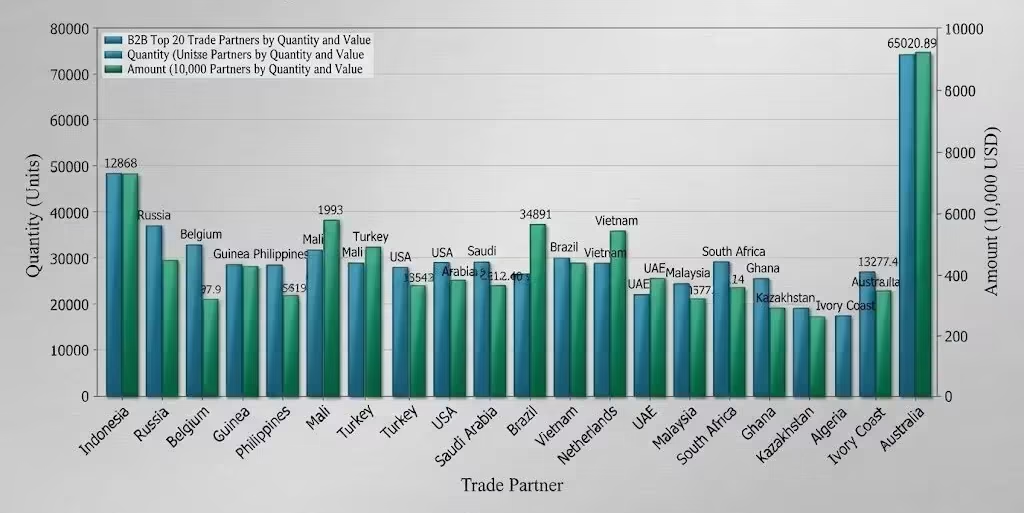
According to international trade statistics compiled by Volza, shipments of mini excavators continue to expand across multiple export destinations, with the United States remaining one of the largest import markets.

Top Import Markets Showing Consistent Demand
| Country | Main Demand Drivers | Popular Machine Size |
|---|---|---|
| United States | Rental fleets, utilities, landscaping | 1.7–3.5 ton |
| Canada | Municipal projects, agriculture | 2–4 ton |
| Australia | Mining support, farm work | 2–5 ton |
| Germany | Urban construction, infrastructure | 1–3 ton |
| Philippines | Residential and public works | 1–2 ton |
| Chile | Mining support and contractors | 2–4 ton |
Rather than focusing only on machine specifications, overseas buyers increasingly compare suppliers based on delivery stability, documentation quality, parts availability, and local technical support.
What Technology Trends Are Reshaping the Mini Excavator Market?
Engine performance is no longer the only selling point.
The latest mini excavator technology trends show that buyers now evaluate machines based on productivity, maintenance efficiency, and digital connectivity.
Several innovations are moving from premium models into mainstream compact equipment.
Electric Mini Excavators Are Expanding Beyond Pilot Projects
Battery-powered machines are becoming practical for applications where noise restrictions or exhaust emissions are major concerns.
Typical examples include:
- Indoor demolition
- Tunnel maintenance
- Municipal repairs
- Landscaping in residential areas
- Utility work around hospitals and schools
While diesel models still dominate the global market, manufacturers continue investing in electric platforms as battery technology improves and environmental regulations become stricter.
The International Energy Agency (IEA) has highlighted the growing role of equipment electrification in reducing emissions across the construction sector.
The International Energy Agency (IEA) has highlighted the growing role of equipment electrification in reducing emissions across the construction sector.
Zero-Tail Swing Designs Continue to Gain Market Share
Compact jobsites leave little room for traditional machine rotation.
As a result, zero-tail swing mini excavators remain one of the fastest-growing product categories.
Their ability to work safely alongside buildings, fences, sidewalks, and traffic lanes makes them attractive for:
- Urban redevelopment
- Utility trenching
- Residential construction
- Municipal maintenance
This design trend is expected to remain one of the defining compact excavator market trends over the next several years.
Which Mini Excavator Sizes Are Selling the Fastest?
Demand is becoming more concentrated around versatile machines rather than the largest available models.
The table below reflects common purchasing patterns seen across international markets.
| Operating Weight | Typical Applications | Buyer Profile |
|---|---|---|
| Under 1 ton | Homeowners, gardens, greenhouses | Small contractors |
| 1–2 tons | Landscaping, irrigation, utilities | Rental companies |
| 2–3 tons | Residential construction | General contractors |
| 3–4 tons | Municipal infrastructure | Government projects |
| 4–6 tons | Commercial construction | Heavy equipment dealers |
Machines in the 1.8–3 ton category continue to represent one of the strongest-performing segments because they balance digging capability, transport convenience, and attachment compatibility.
What Will Shape Mini Excavator Trends After 2026?
The next phase of mini excavator trends is less about raw machine growth and more about how machines connect to workflows, emissions rules, and labor availability.
Instead of isolated improvements, the industry is moving toward a system where equipment, data, and operator behavior are tightly linked.
One clear direction is electrification. Not just experimental units, but practical machines used in daily rental cycles. Municipal projects and indoor demolition are already pushing adoption because noise limits and emission rules are becoming stricter in many cities.
The International Energy Agency (IEA) highlights that construction equipment electrification is accelerating as part of broader decarbonization efforts in heavy-duty machinery:
Another shift is digital fleet control. Even small contractors now expect visibility over fuel use, idle time, and machine location. This is no longer a premium feature—it is becoming standard in competitive rental markets.
Final Outlook on Mini Excavator Trends
The next phase of mini excavator trends is being shaped by three forces:
- Electrification in specific urban applications
- Rental-driven purchasing behavior
- Attachment-based productivity expansion
Machines are no longer evaluated only by digging power. Buyers now focus on how quickly a machine can adapt to different tasks, how efficiently it can be transported, and how easily it integrates into fleet management systems.
The result is a market that is becoming more flexible, more connected, and more dependent on real-world operating economics than ever before.
For importers, dealers, and contractors, understanding these shifts is no longer optional—it directly impacts purchasing strategy, fleet planning, and long-term profitability.
FAQ
What are the latest mini excavator trends in 2026?
Mini excavator trends in 2026 focus on electrification, rental market growth, and increased demand for compact zero-tail swing machines used in urban construction.
Which countries import the most mini excavators?
The largest import markets include the United States, Canada, Australia, Germany, and emerging markets in Southeast Asia and South America, driven by infrastructure and rental demand.
What size mini excavator is most popular?
The most in-demand size is between 1.8 and 3.5 tons because it balances transportability, digging power, and attachment compatibility.
What affects mini excavator prices the most?
Key factors include engine emissions standard, hydraulic system quality, brand positioning, transport cost, and included attachments.
What are mini excavator trends in 2026?
Mini excavator trends in 2026 include increased rental demand, electrification in urban applications, and growing preference for compact zero-tail swing machines.
What is the average hourly rate for a mini excavator?
The average hourly rental rate ranges from $25 to $120 depending on machine size, region, and whether an operator is included.
What is the lifespan of a mini excavator?
Most mini excavators last 8,000–12,000 operating hours under normal conditions, with proper maintenance extending lifespan beyond 15,000 hours.
What is the best mini excavator size in 2026?
The most in-demand size range is 1.8–3.5 tons due to versatility, transport efficiency, and compatibility with multiple attachments.