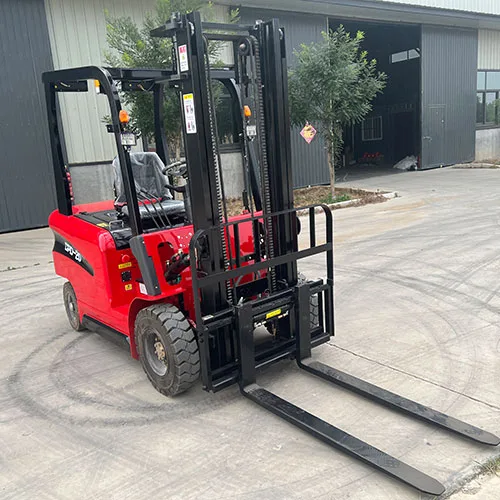
The logistics and warehouse industries are entering a new era of electrification, and the 2 ton electric forklift is at the forefront of this transformation. Offering zero emissions, reduced noise, and high efficiency, these forklifts redefine operational standards for indoor and outdoor material handling. With rising energy costs, stricter environmental regulations, and increasing automation, understanding the latest technological advancements is critical for warehouse managers, fleet operators, and industrial planners.
Table of Contents
Key Takeaways
- Comprehensive analysis of 2 ton electric forklift design, operation, and efficiency.
- In-depth comparison of battery technologies, lifting capabilities, and maintenance costs.
- Global policy incentives, subsidies, and regulations impacting electric forklift adoption.
- Real-world case studies and expert insights for selecting optimal forklift solutions.
- FAQ addressing operational, technical, and maintenance concerns in conversational style.
Understanding the 2 Ton Electric Forklift
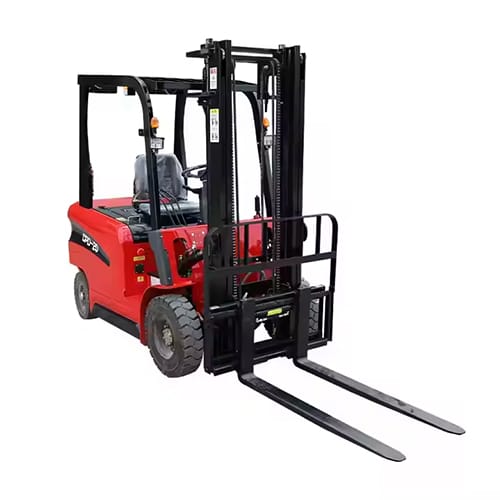
What is a 2 Ton Electric Forklift?
A 2 ton electric forklift is a compact industrial vehicle designed to lift, transport, and place loads up to 2,000 kilograms (≈4,400 lbs). Unlike diesel or LPG forklifts, electric models are powered by rechargeable batteries, producing zero tailpipe emissions and operating quietly. These forklifts are ideal for indoor warehouses, cold storage, and urban logistics where environmental and noise regulations are strict.
Core Advantages:
- Zero emissions for indoor and eco-sensitive environments.
- Reduced operational noise (typically <65 dB).
- Low maintenance due to fewer mechanical components.
- Rechargeable batteries allow flexible charging schedules.
Components and Working Principle
Key Components of a 2 Ton Electric Forklift:
- Battery Pack: Lithium-ion or lead-acid, determines runtime and recharge cycles.
- Electric Motor: Drives the wheels and hydraulic systems for lifting.
- Mast and Forks: Supports load lifting and placement.
- Controller/Drive System: Manages speed, torque, and regenerative braking.
- Safety Systems: Anti-tip sensors, emergency cut-offs, and ergonomic controls.
Working Principle:
Electric energy stored in the battery powers the drive motor and hydraulic systems. When lifting, the electric motor drives the hydraulic pump, raising the forks. Regenerative braking captures kinetic energy during deceleration, extending battery life.
Technical Specifications & Performance Comparisons
Battery Technology and Charging
| Parameter | Lead-Acid Battery | Lithium-Ion Battery |
|---|---|---|
| Capacity | 70–120 Ah | 80–200 Ah |
| Voltage | 48–60 V | 48–80 V |
| Charge Time | 8–10 h | 2–4 h |
| Lifecycle | 1,200 cycles | 3,000–5,000 cycles |
| Weight | Heavier (~400 kg) | Lighter (~250–300 kg) |
| Cost | Lower upfront | Higher upfront |
Industry Insight: According to a 2024 report from the Electric Vehicle Logistics Association (EVLA), lithium-ion batteries increase productivity by 25–30% due to faster charging and longer life cycles.
Load Capacity and Lifting Height
| Feature | Standard 2 Ton Electric Forklift | Heavy-Duty Variant |
|---|---|---|
| Load Capacity | 2,000 kg | 2,500–3,000 kg |
| Standard Lifting Height | 3 m | 4–5 m |
| Maximum Reach | 3.5 m | 5.5 m |
| Operation Weight | 2,000–2,200 kg | 2,500–3,000 kg |
Operational Insight: Compact 2-ton models are preferred for narrow aisles, while heavy-duty variants suit outdoor yards with higher lifting requirements.
Motor and Performance
Drive Motor: Permanent magnet or AC induction motors are commonly used.
- AC motors offer higher efficiency (~90–95%) and lower maintenance.
- Brushless DC motors are lighter, quieter, and suitable for precision indoor operations.
Regenerative Braking: Captures up to 15–20% of energy during deceleration, improving battery utilization.
Comparison: Electric vs Diesel/LPG 2 Ton Forklifts
| Feature | Electric | Diesel/LPG |
|---|---|---|
| Emissions | Zero | CO₂, NOx, particulates |
| Noise | <65 dB | 75–85 dB |
| Operating Cost | $0.05–0.08 per kWh | $0.15–0.30 per liter fuel |
| Maintenance | Low (fewer moving parts) | High (engine, exhaust, transmission) |
| Indoor Suitability | Excellent | Limited |
| Lifespan | 8–12 years | 10–15 years (high maintenance) |
Expert Opinion: Dr. Elaine Chen, EVLA, 2025: “For urban and indoor logistics, electric forklifts are increasingly cost-effective when factoring in total lifecycle cost and environmental benefits.”
Maintenance and Lifecycle Cost Analysis
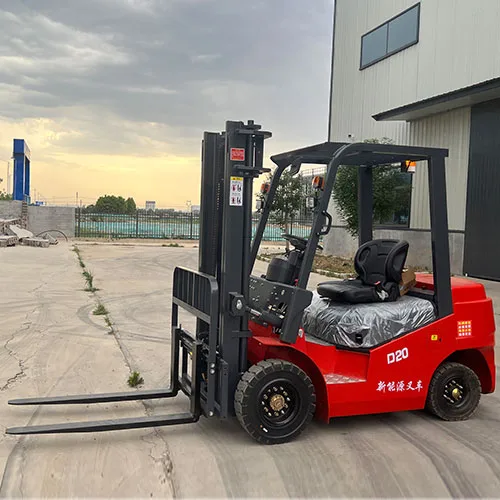
Maintenance Requirements
- Electric forklifts require minimal lubrication and engine maintenance.
- Battery checks, motor inspection, and hydraulic fluid monitoring are essential.
- Predictive maintenance using IoT sensors can reduce downtime by 20–30%.
Lifecycle Cost (TCO)
- Initial cost: Electric ~15–25% higher than diesel.
- Operating cost: Electric 40–50% lower over 5 years due to energy savings and reduced maintenance.
- Battery replacement every 5–8 years for lead-acid, 8–12 years for lithium-ion.
Example Calculation: A fleet of 10 electric forklifts operating 8 h/day reduces fuel and maintenance cost by ~$50,000 annually compared to diesel equivalents.
Global Policies and Incentives
United States
- Federal tax credits up to $7,500 for electric material handling equipment.
- Certain states offer additional grants for warehouse electrification.
European Union
- EU Green Deal encourages emission-free indoor fleets; funding covers up to 40% of battery costs.
- Some municipalities restrict diesel forklifts indoors.
China
- Subsidies up to RMB 40,000 per electric forklift to encourage energy-efficient logistics.
- National standard GB/T 28084-2011 mandates zero indoor emissions.
Policy Insight: Incentives reduce upfront cost gaps, accelerating adoption, especially in high-usage warehouses.
Market Trends & Future Outlook
Global Market Forecast (2025–2035)
- 2025 market size: ~$3.2 billion
- CAGR 2025–2035: 7.5%
- Major growth drivers: indoor logistics, e-commerce warehouses, sustainability mandates.
Industry Trends
- AI-powered navigation and fleet automation.
- Quick-swap battery systems for continuous operation.
- Smart telemetry for remote monitoring and predictive maintenance.
- Lightweight and modular designs to optimize warehouse space.
Operational Strategies and Best Practices
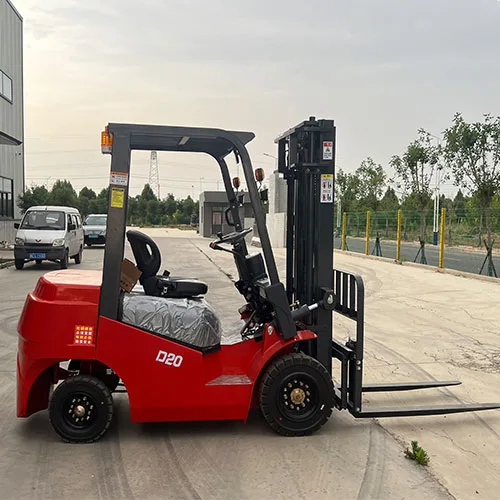
Energy Efficiency Tips
- Schedule charging during off-peak hours.
- Use regenerative braking wherever possible.
- Optimize fleet routing to reduce unnecessary travel.
Safety and Ergonomics
- Install anti-tip systems and overload alarms.
- Adjust seat, steering, and controls for operator comfort.
- Implement mandatory operator training and certifications.
Warehouse Layout Optimization
- Narrow aisle designs compatible with compact 2-ton electric forklifts increase storage density by 20–25%.
- Integrate charging stations strategically to minimize downtime.
Sustainability and Circular Economy
- Lithium-ion battery recycling programs recover up to 90% of valuable metals.
- Modular components reduce repair waste.
- Fleet electrification contributes to carbon footprint reduction (~2.5–3 tons CO₂/year per forklift replaced).
Case Study: Amazon’s European warehouses reported 40% reduction in CO₂ emissions after transitioning 70% of their 2-ton fleet to electric forklifts.
Conclusion
The 2 ton electric forklift represents the next generation of industrial material handling: efficient, sustainable, and increasingly intelligent. From battery technology, performance specifications, and maintenance considerations to regulatory incentives, market trends, and circular economy integration, understanding these forklifts holistically allows operators to maximize productivity while reducing environmental impact.
By selecting the right battery, mast configuration, and operational strategy, warehouses and industrial facilities can achieve higher throughput, lower costs, and eco-compliance, making the 2-ton electric forklift a cornerstone of modern logistics in 2025 and beyond.
FAQ
Q1: How long does a 2 ton electric forklift run on a single charge?
A: Depending on battery type, 6–12 hours for lead-acid, 8–16 hours for lithium-ion.
Q2: How fast can I charge it?
A: Lead-acid: 8–10 hours; Lithium-ion: 2–4 hours with fast chargers.
Q3: Are they suitable for outdoor use?
A: Yes, but lithium-ion models handle temperature extremes better and maintain higher performance in outdoor conditions.
Q4: Can I use multiple shifts with a single battery?
A: Lithium-ion batteries allow opportunity charging between shifts; lead-acid may require battery swapping for continuous operation.
Q5: How does it compare to diesel in operating cost?
A: Electric forklifts have 40–50% lower operating costs due to cheaper energy and reduced maintenance.
Q6: Are there incentives for buying electric forklifts?
A: Yes, many countries offer subsidies, tax credits, and grants to offset upfront cost.
Q7: How long does a battery last?
A: Lead-acid: 5–8 years; Lithium-ion: 8–12 years depending on usage and maintenance.
Q8: Can these forklifts operate in narrow aisles?
A: Yes, compact 2-ton electric models are designed for narrow aisle and high-density storage operations.
Q9: How does regenerative braking help?
A: Captures energy during deceleration, extending battery life and reducing energy costs.
Q10: Is maintenance difficult?
A: Maintenance is simpler than diesel forklifts; mainly battery care, motor inspection, and hydraulics.
Q11: Are there smart fleet management tools?
A: Yes, IoT sensors, predictive maintenance, and AI routing software improve efficiency and safety.
Q12: What is the environmental impact?
A: Zero exhaust emissions indoors, reduced CO₂ footprint, and recyclable battery components contribute to sustainability.
Q13: Can they handle heavy-duty tasks?
A: Standard 2-ton models manage 2,000 kg; heavy-duty variants support 2,500–3,000 kg.
Q14: Are lithium-ion batteries safe?
A: Yes, with proper BMS (Battery Management System), thermal controls, and certified chargers.
Q15: How to choose between lead-acid and lithium-ion?
A: Lithium-ion offers higher productivity, faster charging, longer life, and lower maintenance; lead-acid has lower upfront cost but longer downtime.