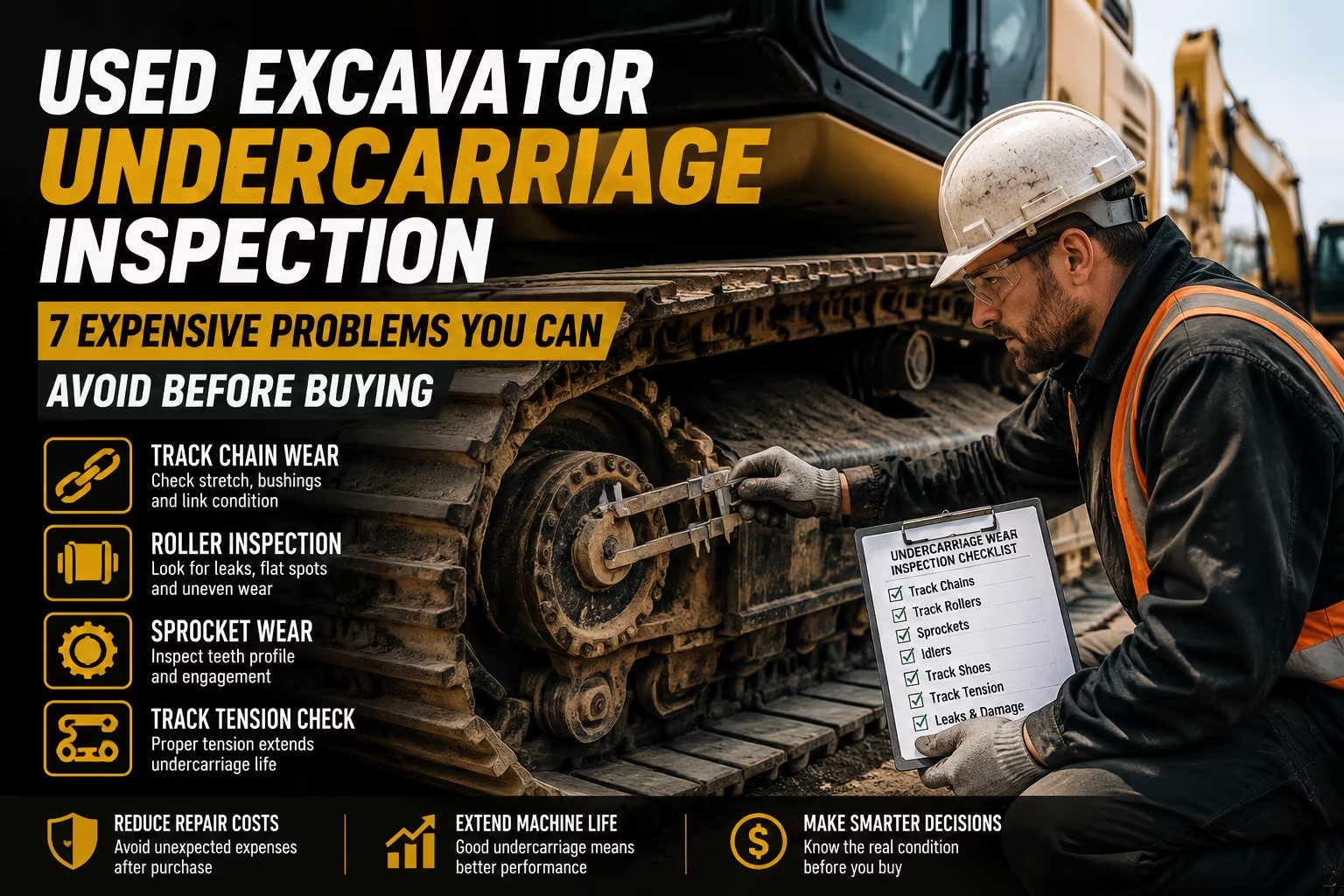
Buying a used excavator is not only about checking engine hours, hydraulic performance, or the condition of the bucket. The used excavator undercarriage is often the part that determines whether a machine remains profitable or becomes a repair burden after purchase.
Many buyers underestimate undercarriage wear because the machine can still operate normally during a quick inspection. However, worn track chains, rollers, sprockets, or idlers can require thousands of dollars in repairs shortly after delivery.
This guide explains how a proper excavator undercarriage inspection helps buyers identify hidden problems, estimate remaining service life, and avoid unexpected maintenance costs before purchasing a used machine.
Table of Contents
Why Does the Undercarriage Matter When Buying a Used Excavator?
The undercarriage carries the entire weight of the excavator and transfers engine power to the ground. Unlike components that are visible during operation, many undercarriage parts experience continuous friction and impact that are difficult to evaluate without careful inspection.
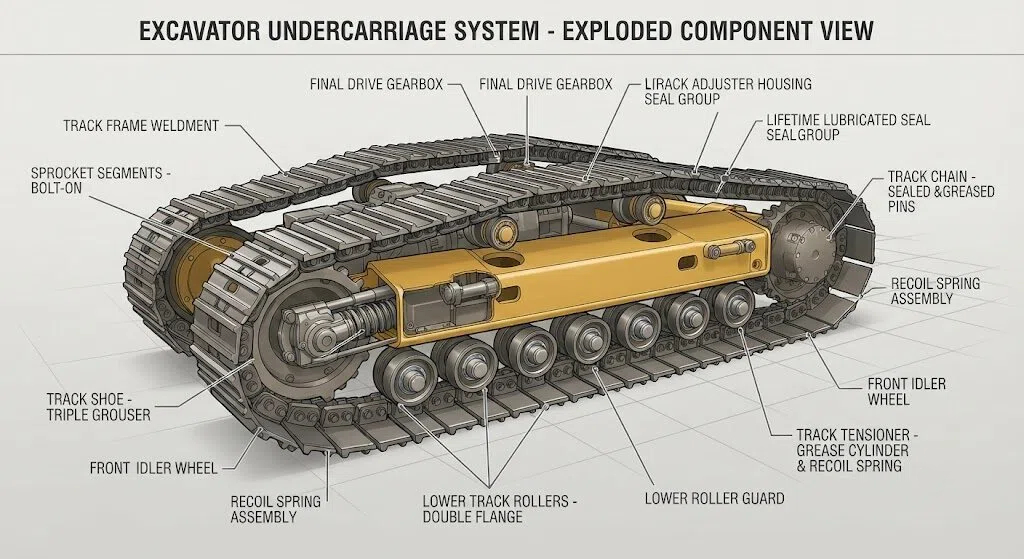
A typical crawler excavator undercarriage includes:
- Track chains
- Track shoes
- Track rollers
- Carrier rollers
- Front idlers
- Sprockets
- Track frames
For buyers, this means a machine with a healthy engine but a worn undercarriage may not be a good investment. Replacing major undercarriage components can sometimes approach a significant percentage of the machine’s resale value.
A proper used excavator undercarriage inspection helps answer three important questions:
1.How much remaining life does the undercarriage have?
2.Which components may require replacement soon?
3.Is the asking price reasonable based on the machine’s actual condition?
What Problems Can a Used Excavator Undercarriage Inspection Help You Avoid?
The biggest mistake buyers make is checking whether the excavator can move but ignoring whether the undercarriage can continue working for hundreds or thousands of hours.
A proper inspection can help avoid the following problems.
1.How Can You Identify Worn Track Chains Before Purchase?
Track chains are one of the most expensive parts of an excavator undercarriage system. When the chain wears beyond acceptable limits, the machine may experience poor tracking performance, increased vibration, and faster wear of connected components.
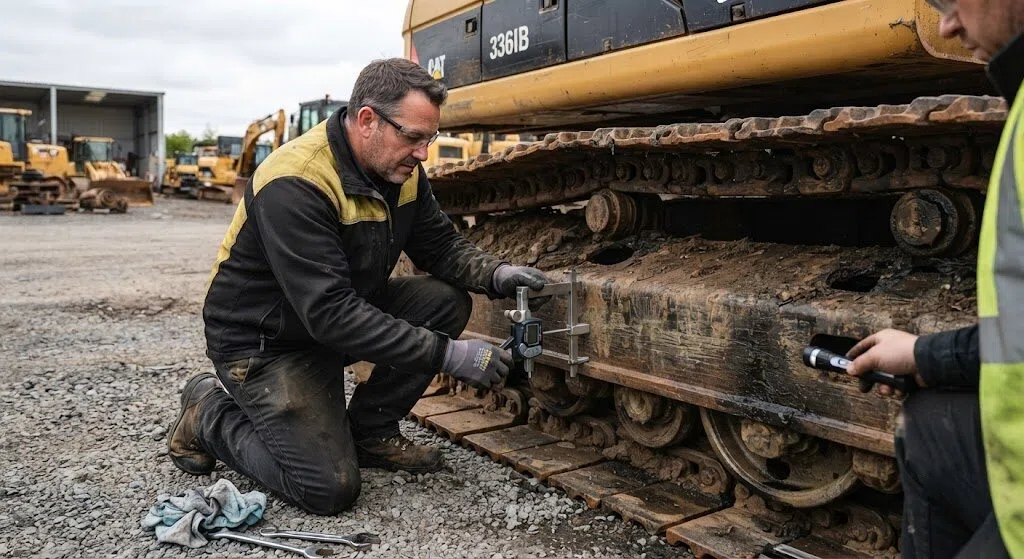
During a used excavator track wear inspection, buyers should check:
- Bush diameter
- Link height
- Pitch extension
- Pin and bushing condition
- Cracks or abnormal stretching
A common mistake is judging track condition only by appearance. A track chain may look acceptable externally while internal wear has already reduced its remaining service life.
According to the Society of Automotive Engineers (SAE), engineering measurements are important when evaluating machinery components because visual inspection alone cannot accurately determine material wear limits.
For used equipment buyers, measurement data is more valuable than a seller’s estimate such as “the tracks are still good.”
2.Why Should You Check Excavator Rollers Before Buying?
Track rollers support the excavator’s weight and guide the movement of the track chain. Because they operate under constant load, roller problems are common on machines used in mining, demolition, and rocky environments.
During an excavator roller inspection, look for:
- Oil leakage around roller seals
- Flat spots on roller surfaces
- Uneven wear patterns
- Abnormal noise during operation
A leaking roller does not always stop a machine immediately, but it usually indicates internal seal damage. If several rollers require replacement, repair costs can increase quickly.
Buyers should also inspect whether roller wear is consistent on both sides of the machine.
Uneven wear may indicate:
- Frequent operation on slopes
- Incorrect track adjustment
- Poor operating habits
- Previous undercarriage damage
3.What Does Sprocket Wear Tell You About Machine Condition?
The sprocket transfers driving force from the final drive to the track chain. Because it directly contacts the track bushings, excessive wear can affect the entire undercarriage system.
When checking excavator sprocket wear, pay attention to:
- Tooth shape
- Tooth height
- Sharp or pointed edges
- Uneven contact patterns
A worn sprocket may cause:
- Track jumping
- Increased chain wear
- Reduced travel efficiency
Replacing only a worn sprocket while keeping severely worn track chains is usually not a long-term solution. These parts work together, and mismatched wear levels can shorten component life.
4.How Does Track Tension Affect Excavator Undercarriage Life?
Incorrect track tension is one of the easiest problems to overlook during a used excavator inspection.
The track should not be extremely tight or excessively loose.
If the track is too tight:
- Contact pressure increases
- Roller and chain wear accelerates
- Travel resistance increases
If the track is too loose:
- Track derailment risk increases
- Impact loads become higher
- Component alignment may suffer
A simple excavator track tension check should be performed according to manufacturer specifications because the correct adjustment depends on machine size, working conditions, and track design.
What Should Buyers Check Before Paying?
A visual inspection is a good starting point, but experienced buyers know that appearance alone does not show the remaining service life of a machine.
A proper used excavator undercarriage inspection should combine visual checks, operating tests, and measurement data. The goal is not only to find damaged parts, but also to estimate future repair costs before making a purchase decision.
Used Excavator Undercarriage Inspection Checklist: Which Parts Need Attention?
The following checklist helps buyers evaluate the main wear points before purchasing a used excavator.
| Component | What to Check | Warning Signs | Possible Result |
|---|---|---|---|
| Track chains | Link height, pitch, bush wear | Extended chain, loose movement | Chain replacement needed |
| Track shoes | Shoe thickness, cracks, bending | Broken edges, uneven wear | Reduced traction |
| Track rollers | Leakage, surface wear, rotation | Oil leaks, flat spots | Roller failure risk |
| Carrier rollers | Alignment and rotation | Noise or uneven movement | Poor track guidance |
| Front idlers | Wear profile and adjustment | Misalignment, damage | Track instability |
| Sprockets | Tooth shape and engagement | Sharp teeth, skipping | Accelerated chain wear |
| Track frame | Cracks and welding marks | Repairs or deformation | Structural concerns |
This inspection approach follows the same principle used in professional equipment maintenance: identify wear patterns early instead of waiting for component failure.
How Much Does Excavator Undercarriage Replacement Cost?
One reason buyers should inspect the undercarriage carefully is the replacement cost.
The excavator undercarriage replacement cost depends on:
- Excavator size
- Brand and model
- Operating environment
- Number of components requiring replacement
- Availability of partsTypical replacement expenses may include:
| Repair Item | Estimated Cost Range |
|---|---|
| Track rollers | Hundreds to several thousand dollars |
| Carrier rollers | Hundreds to several thousand dollars |
| Sprocket replacement | Hundreds to several thousand dollars |
| Track chain replacement | Several thousand dollars |
| Complete undercarriage rebuild | $10,000+ for larger machines |
The exact cost varies significantly between compact excavators and large mining machines.
For example:
A 5-ton mini excavator operating on soft soil may experience much slower wear compared with a 30-ton excavator used in quarry applications.
This is why buyers should not evaluate a machine only by:
- Purchase price
- Engine hours
- Exterior appearance
The remaining life of the undercarriage should also influence the final price negotiation.
How Can You Estimate Remaining Undercarriage Life Before Buying?
Many buyers ask:
“How many hours does excavator undercarriage last?”
The answer depends on operating conditions.
A crawler excavator undercarriage may last several thousand operating hours when properly maintained, but severe environments can reduce service life significantly.
Factors that accelerate wear include:
- Rocky ground
- Abrasive soil
- Long-distance travel
- Poor track adjustment
- Incorrect operating techniques
For example:
A machine working in demolition or quarry conditions may experience faster wear than the same model used for general earthmoving.
A good used excavator buying guide should always include operating history, not only hour readings.
What Warning Signs Mean You Should Avoid Buying a Used Excavator?
Not every worn undercarriage means the machine is a bad purchase. Some wear is expected on used equipment.
However, certain conditions should make buyers reconsider.
1.Multiple Leaking Rollers
One leaking roller may be repairable.
Several leaking rollers often indicate:
- Long-term neglect
- High operating stress
- Upcoming maintenance expenses
2.Severe Track Chain Stretch
Excessive chain elongation means the track system has already experienced significant wear.
Replacing only one part may not solve the problem because related components may already be worn.
3.Cracks or Welding Repairs on Track Frames
The track frame supports the entire undercarriage assembly.
Visible cracks or unusual welding repairs may indicate:
- Heavy impact damage
- Previous structural failure
- Improper repair history
These problems require careful evaluation before purchase.
4.Different Wear Levels Between Left and Right Tracks
Uneven wear is an important clue.
Possible causes include:
- Working continuously on slopes
- Incorrect machine operation
- Alignment problems
A machine with uneven wear may require additional inspection before purchase.
How Should Buyers Compare DIY Inspection and Professional Measurement?
A basic inspection can help buyers eliminate obviously poor machines. However, professional measurement provides a more accurate estimate of remaining life.
| Inspection Method | What It Can Identify | Limitation |
|---|---|---|
| Visual inspection | Cracks, leaks, obvious damage | Cannot measure exact wear |
| Operation test | Noise, vibration, tracking issues | Limited information |
| Wear measurement tools | Remaining component life | Requires experience |
For lower-cost machines, a basic inspection may be enough.
For expensive excavators, professional measurement is usually worth considering because a wrong purchase decision can exceed the inspection cost.
What Are the Most Common Mistakes When Checking a Used Excavator?
Many buyers focus on the wrong areas.
Here are common mistakes:
Only checking engine hours
Hour meters do not show:
- Working environment
- Operator habits
- Maintenance quality
A machine with fewer hours can still have heavy undercarriage wear if used in harsh conditions.
Ignoring travel performance
During testing, buyers should check:
- Straight-line travel
- Turning ability
- Unusual vibration
- Track noise
Travel problems often reveal hidden undercarriage issues.
Accepting seller descriptions without measurement
Statements like:
“Tracks are about 80% good”
should be supported by actual inspection.
A measurement-based evaluation provides a more accurate purchasing decision.
Why Undercarriage Condition Should Influence Your Buying Decision
A used excavator should be evaluated as a complete machine, not just by engine hours or appearance.
The undercarriage directly affects operating stability, maintenance costs, and future downtime. A machine with worn tracks may appear affordable at first, but hidden repair requirements can quickly change the total ownership cost.
For anyone purchasing construction equipment, checking the used excavator undercarriage before payment is one of the simplest ways to avoid unexpected repair expenses and choose a machine that matches the intended workload.
FAQ
How do I inspect a used excavator undercarriage before buying?
Check track chains, rollers, sprockets, idlers, shoes, and track frames. Look for oil leaks, uneven wear, cracks, and excessive chain stretch. Measurement is more accurate than visual judgment alone.
What is the most expensive part of an excavator undercarriage?
Track chains and complete undercarriage assemblies are usually among the most expensive components to replace. The final cost depends on excavator size, model, and operating conditions.
How do I know if an excavator track chain is worn?
Signs of worn track chains include extended pitch, loose track movement, damaged bushings, and uneven contact with sprockets. A wear measurement is recommended before purchase.
How many hours does excavator undercarriage last?
Service life varies depending on ground conditions, maintenance, and operation methods. Excavators working on abrasive surfaces usually experience faster wear than machines used on softer ground.
Can I replace only one excavator undercarriage component?
Sometimes yes, but it depends on the wear condition of connected parts. Replacing one new component with heavily worn parts may reduce the service life of the new component.