Wiring thousands of dollars across the globe for heavy machinery is risky. You are buying a machine you haven’t test-driven, relying on photos and spec sheets. If you choose the wrong machine, you aren’t just losing the purchase price—you are losing weeks of project time waiting for obscure replacement parts.
To avoid bringing a 20-ton piece of scrap iron to your job site, you must evaluate used excavator brands based on cold, hard operational data.
Table of Contents
What Are the Best Used Excavator Brands for Import?
The short answer: The best brand is the one your local dealer can supply parts for within 48 hours.
Many first-time importers search for the best used excavator brands for import expecting a simple ranking. That ranking does not exist. A machine that dominates a quarry in Australia might be useless on a residential site in Nigeria if the local mechanics cannot read its diagnostic codes.
Before looking at price tags, map out your local supply chain. If your nearest town only stocks aftermarket parts for Japanese machines, your procurement decision is already made. Buying a rare European model because it was cheap in China means your machine will sit idle for a month when a simple hydraulic seal blows.
How to Compare Used Excavator Brands by Total Cost of Ownership?
Do not calculate your budget based purely on the CIF (Cost, Insurance, and Freight) price. You must calculate the Total Cost of Ownership (TCO), which factors in downtime, fuel consumption, and component lifespan.
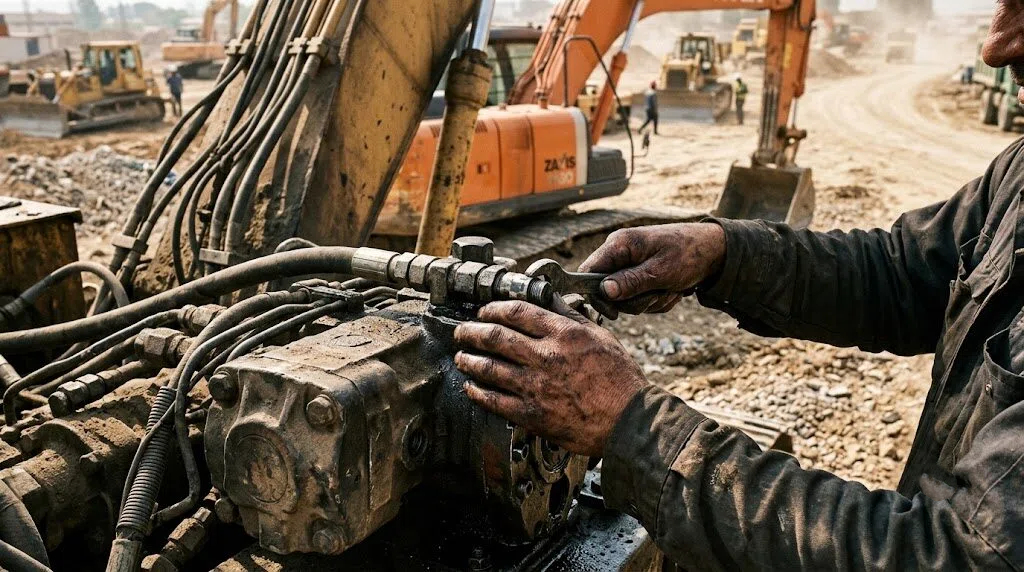
When figuring out how to compare used excavator brands, start with the engine and hydraulic synergy. A mismatch here bleeds money. For instance, poor fluid maintenance by the previous owner will destroy the internal tolerances of the main pump. You cannot fix this with a simple oil change. According to technical data on hydraulic system degradation and fluid contamination published by Machinery Lubrication, a compromised hydraulic system will continually generate metal shavings, destroying newly replaced valves within weeks.
Ask the supplier in China for oil sample reports. If they cannot provide them, assume you will need to rebuild the main pump and factor that $3,000 to $5,000 into your initial budget.
Does a Used CAT Excavator Actually Hold Higher Resale Value?
Yes, but you pay a premium for that liquidity upfront.
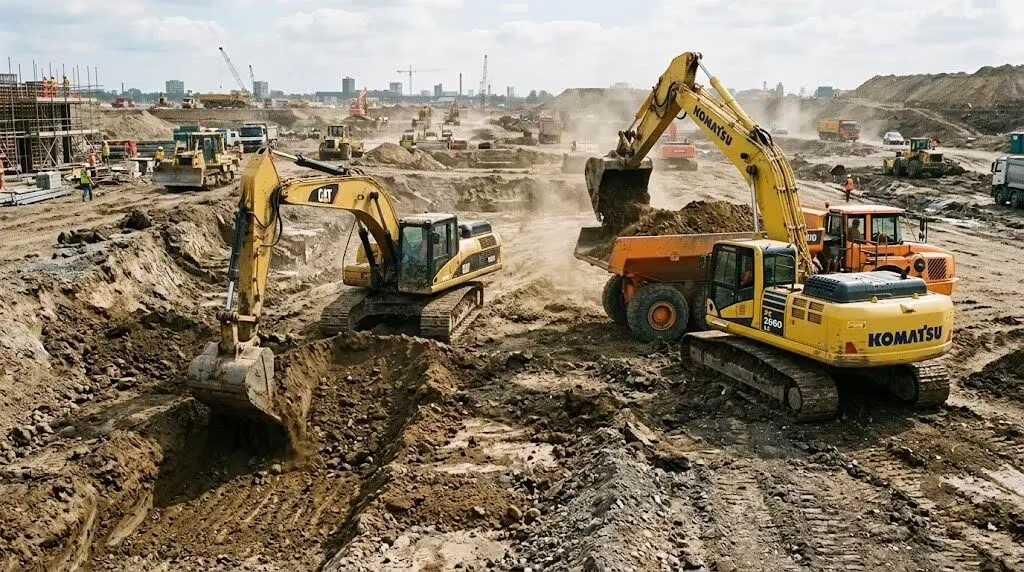
A used CAT excavator functions almost like a currency in the heavy equipment world. Because Caterpillar has the most extensive global dealer network, secondary buyers are always willing to take these machines off your hands. Data from Ritchie Bros regarding historical equipment pricing trends at auctions consistently shows North American brands holding strong residual values, particularly in the 20-ton to 30-ton weight classes.
However, a CAT is heavy, and its undercarriage components are notoriously expensive to replace. If your project involves highly abrasive terrain (like silica sand or crushed rock), the track chains and sprockets will wear out faster. If your contract only lasts 12 months, paying a 20% premium for a CAT just for the resale value might ruin your cash flow. Buy CAT for multi-year, heavy-duty earthmoving where structural frame integrity is non-negotiable.
Used Komatsu Excavator vs. Used SANY Excavator
This is the most common dilemma for mid-sized contractors: Japanese engineering versus aggressive Chinese pricing.
A used Komatsu excavator is built around proprietary hydraulics. Komatsu manufactures its own engines and pumps to ensure they communicate perfectly. The result is extremely precise boom and stick control, making them ideal for urban trenching, pipe-laying, or tight-quarter demolition. Furthermore, their closed-center load sensing systems (CLSS) save thousands of gallons of diesel over a year.
On the other hand, a used SANY excavator is a masterclass in component integration. SANY machines often utilize Kawasaki hydraulic pumps and Isuzu or Cummins engines. Why does this matter to you? Because these are globally standardized parts. You don’t need a SANY-certified dealer to fix an Isuzu engine; any diesel mechanic can do it. If you are operating in South America, Africa, or Southeast Asia, the ROI on a SANY is hard to beat. The initial depreciation hit has already been taken by the first owner in China, leaving you with a machine that runs on standard, easy-to-find components.
What Hidden Defects Should Buyers Check Beyond the Brand Plate?
The brand plate means nothing if the machine was abused in a rock quarry for 10,000 hours. You need to verify the physical metal, not just the name.
1.The Slew Ring Play: Rotate the cab and stop suddenly. If the cab rocks back and forth, the slew bearing is shot. Replacing this requires splitting the entire machine in half.
2.Boom Base Cracks: Look closely at the welds where the boom connects to the main body. Fresh paint over this specific area usually hides structural welding repairs. As detailed in Equipment World’s guide on how to inspect a used excavator’s hydraulic cylinders and slew ring, ignoring these stress fractures will lead to catastrophic boom failure under heavy load.
3.The “Fresh Paint” Trap: Be very suspicious of a 10-year-old machine that looks shiny. Exporters sometimes spray paint right over hydraulic hoses, grease fittings, and wiring harnesses. This hardens the rubber and masks severe leaks.
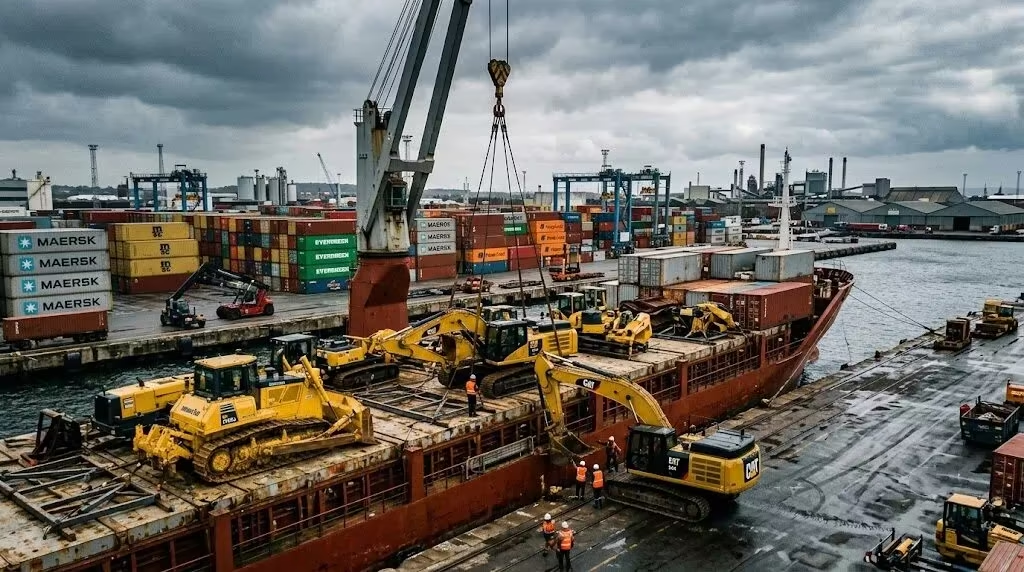
4.Logistics and Shipping Dimensions: A machine that is cheap to buy might be a nightmare to ship. Ensure your chosen machine fits standard Roll-on/Roll-off dimensions. If it is too wide, you will pay oversized cargo fees. Review roll-on/roll-off (RoRo) shipping logistics for heavy machinery via Freightos to calculate exact port-to-port costs before committing to a wide-track model.
Choosing the right machine requires looking past the decals on the counterweight. By focusing on parts logistics, assessing fluid contamination, and ignoring hour meters in favor of physical wear indicators, you protect your capital. Analyze your local support network first, map out your worksite demands, and then filter the used excavator brands to find the exact engineering match for your next project.
FAQ
Can I trust the hour meter on an imported used excavator?
No. Hour meters are easily altered digitally or swapped mechanically. Never assess a machine by the hour meter alone. Instead, gauge the wear on the foot pedals in the cab, the internal wear of the bucket pins, and track tension. Experienced operators frequently point out in discussions by mechanics on Reddit regarding used excavator purchases that pedal tread wear is the most honest indicator of real machine hours.
Are replacement parts for Chinese excavator brands available in Europe or the US?
Yes, but indirectly. Because brands like SANY, XCMG, and Liugong use internationally recognized engines (Cummins/Isuzu) and hydraulics (Kawasaki/Rexroth), you bypass the brand’s dealership and buy the parts directly from engine or pump distributors.
What emission standards do Chinese used excavators meet?
Machines built for the Chinese domestic market usually adhere to “National III” or “National IV” standards. These do not directly translate to US EPA Tier 4 Final or EU Stage V. If your local government requires strict emission compliance for public contracts, you must verify the exact engine plate data before importing.