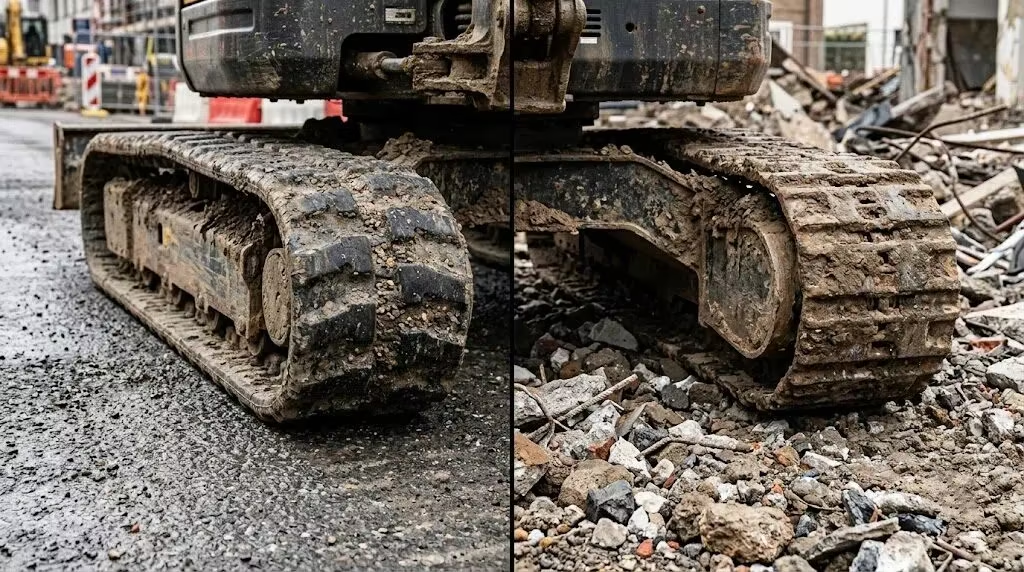
The debate over rubber or steel tracks for mini excavator configurations boils down to one metric: matching the undercarriage to the dirt you plan to dig. A rubber track excavator will save a finished driveway but might snap in a scrap yard. A steel track excavator dominates demolition debris but will destroy municipal asphalt, costing you a fortune in pavement repair penalties. With 2026 urban construction regulations tightly policing noise limits and site footprint, selecting the correct mini excavator tracks directly impacts your project’s margin. This breakdown dissects traction, ground pressure, and actual failure points so you can stop guessing and equip your machine properly.
Table of Contents
Are You Prioritizing Pavement Protection or Raw Traction?
Every time your machine moves, it transfers its entire operating weight to the ground through a contact patch. The material making up that contact patch dictates where you can work.
Rubber systems utilize a continuous vulcanized belt reinforced with internal metal cords and forged iron cores. They flex around obstacles and distribute weight evenly. Steel systems use interlocking forged steel plates (shoes) pinned together on a heavy chain. They do not flex; they crush.
If you take a 4-ton machine onto a paved residential street, the steel grousers act like a cheese grater on the asphalt. According to the Federal Highway Administration’s pavement preservation guidelines, point loading from heavy steel machinery causes micro-fractures in asphalt, leading to rapid water ingress and pothole formation. The city inspector will bill you for that damage. Conversely, running a rubber belt over jagged concrete rebar will slice through the rubber coating, expose the internal metal cords to moisture, and cause a sudden snap mid-shift.
When to Deploy a Rubber Track Excavator on Site
You mount rubber when surface damage and vibration are your primary constraints. Landscapers, utility trenchers working in established neighborhoods, and contractors performing indoor tear-downs rely entirely on rubber.
Beyond surface protection, rubber absorbs mechanical shock. If your operator spends eight hours tracking across hard concrete, steel chains transfer every bump directly into the cab, leading to operator fatigue and premature wear on the boom pins. A rubber track excavator dampens this vibration. Furthermore, 2026 noise ordinances in major metro areas strictly limit decibel output near residential zones. Rubber eliminates the metallic clanking of steel shoes, allowing contractors to operate within noise compliance windows.
However, rubber has a hard limit. Discussions among contractors on this Reddit /r/Construction thread
highlight a common mistake: trying to spin-turn a rubber-tracked machine on curbs or large rocks. This forces the rubber out of the idler wheel alignment, causing detracking (the track popping off). If you are operating a zero tail swing mini excavator in extremely tight urban alleys, you must make wide, gradual turns to keep the rubber seated on the sprockets.
Where a Steel Track Excavator Survives
Steel belongs in environments that destroy rubber: forestry, quarry work, severe rock excavation, and heavy demolition. In these settings, you need weight, aggressive grip, and puncture resistance.
Steel chains add significant weight to the bottom of your machine. This lowers the center of gravity. When you are digging on a 30-degree muddy incline, a steel track excavator anchors itself into the hillside. The steel grousers bite deep into the soil, whereas rubber would slip and slide.
Furthermore, steel systems require entirely different maintenance habits. You must monitor pin wear, bushing slop, and chain sag. A detailed evaluation by Construction Equipment Magazine points out that while rubber tracks are treated as consumable wear items, steel undercarriages are rebuildable capital investments. If you are running steel in dusty, abrasive environments, you also face heavier airborne debris, which is why operators in these conditions almost always opt for enclosed cabs rather than open ROPS designs. You can review the exact protective differences in our cab vs canopy mini excavator guide.
Rubber or Steel Tracks for Mini Excavator: The Real-World Checkpoints
You cannot make a purchasing decision based on the sticker price of the replacement tracks alone. You must calculate the hourly wear rate and the specific terrain of your upcoming bids. The table below outlines the operational realities. Do not just look at the lifespan; look at the maintenance penalty if you ignore track tensioning.
| Operational Factor | Rubber System | Steel System | Decision Judgment |
| Ground Disturbance | Minimal. Leaves slight flat impressions on soft grass. | Extreme. Tears up sod, destroys asphalt, chips concrete. | If the contract requires leaving the site exactly as you found it, use rubber. |
| Traction in Mud/Slopes | Moderate. Tends to smear and slip on wet clay. | Maximum. Cuts through top layer to find hardpan. | If working primarily in uncompacted, wet earth, steel is mandatory for safety. |
| Average Lifespan | 1,000 to 1,500 operating hours (highly dependent on turns). | 2,000 to 2,500+ operating hours. | Rubber requires faster replacement cycles; budget for replacements every two years under heavy use. |
| Maintenance Need | Low. Check tension via grease cylinder weekly. Keep clean of mud. | High. Requires regular greasing, pin/bushing checks, shoe bolt tightening. | If your crew is notoriously bad at daily greasing, rubber offers less mechanical liability. |
| Failure Mode | Sudden snap. Internal cords rust and break instantly. | Gradual wear. Pins elongate, chain sags, sprockets grind down. | Steel gives you months of warning before failure; rubber can fail without visible external warning if cut. |
The most important takeaway from this comparison is the failure mode. When steel wears out, your machine gets sloppy and loud, but you can usually finish the week. When rubber tears past the iron core, the track breaks in half, immediately deadlining your machine in the dirt.
The Bolt-On Pad Compromise
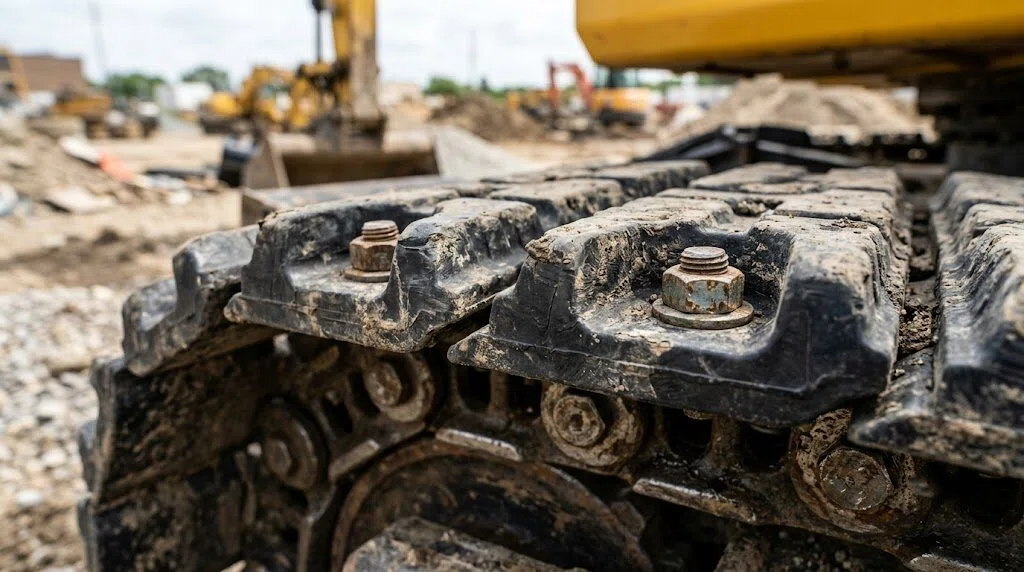
If your fleet tackles municipal road repair on Monday and land clearing on Thursday, neither pure rubber nor pure steel works perfectly. The mechanical fix is utilizing bolt-on rubber pads over a steel chain.
You get the heavy-duty steel chain, the heavy rollers, and the exact tensioning system of a steel undercarriage, but with replaceable rubber blocks bolted to the metal shoes. As noted in Prime Source’s track comparison, this setup gives you the pavement protection of rubber with the unyielding chain strength of steel. When a pad tears, you unbolt that single pad and replace it, rather than throwing away a $1,500 continuous rubber belt. The downside? It adds even more weight and increases your upfront purchasing cost.
Sizing the Best Tracks for Mini Digger Fleets
Track selection must match the machine’s operating weight and hydraulic output. You cannot simply throw the widest, heaviest steel track on a 1.5-ton micro-digger and expect it to move.
1.Verify the Pitch and Link Count: You need three measurements to order rubber: the width (in millimeters), the pitch (distance between the center of one iron core to the next), and the total number of links. A mismatch here means the track will not seat in the drive sprocket.
2.Check the Undercarriage Compatibility: Not all machines can swap between rubber and steel. As explained in Wikipedia’s engineering breakdown of continuous tracks, the idler wheels and bottom rollers are often shaped differently for rubber (to prevent the belt from sliding off) versus steel (which locks into a specific channel). If your machine requires swapping the entire undercarriage frame to change materials, the cost will outweigh the benefit.
3.Assess the Weight Penalty: Steel tracks add hundreds of pounds to the machine. While this improves lifting stability, it drastically alters transport requirements. Before upgrading to heavy steel configurations, check your trailer payload capacity and review the weight limits detailed in our mini excavator size choices breakdown.
Running the correct mini excavator tracks ensures your machine stays working instead of sitting on blocks in a muddy trench waiting for parts. A rubber track excavator is a strict requirement for urban hardscapes, inside buildings, and noise-restricted zones. Conversely, a steel track excavator provides the unforgiving grip and heavy counterweight required for steep grades, deep mud, and rocky demolition. Analyze the ground you dig in most frequently, verify your undercarriage compatibility, and invest in the system that protects your project deadlines.
FAQ
Why do my rubber tracks keep slipping off the idler wheel?
Detracking happens for three reasons: insufficient track tension (the grease cylinder in the track frame has lost pressure), debris packing into the undercarriage and forcing the track over the roller flange, or the operator executing aggressive spin-turns on uneven curbs. Clean the mud out of your undercarriage daily and check tension weekly.
Can I run my tracks backwards to get more life out of them?
Measure the “pitch stretch.” As the steel pins and bushings wear down from friction, the physical distance between the links increases. The chain becomes longer. Eventually, the grease tensioner maxes out and can no longer keep the track tight. If your tensioner is fully extended and the track still droops heavily between the top rollers, the chain is stretched beyond its usable limit and will start destroying your drive sprockets.