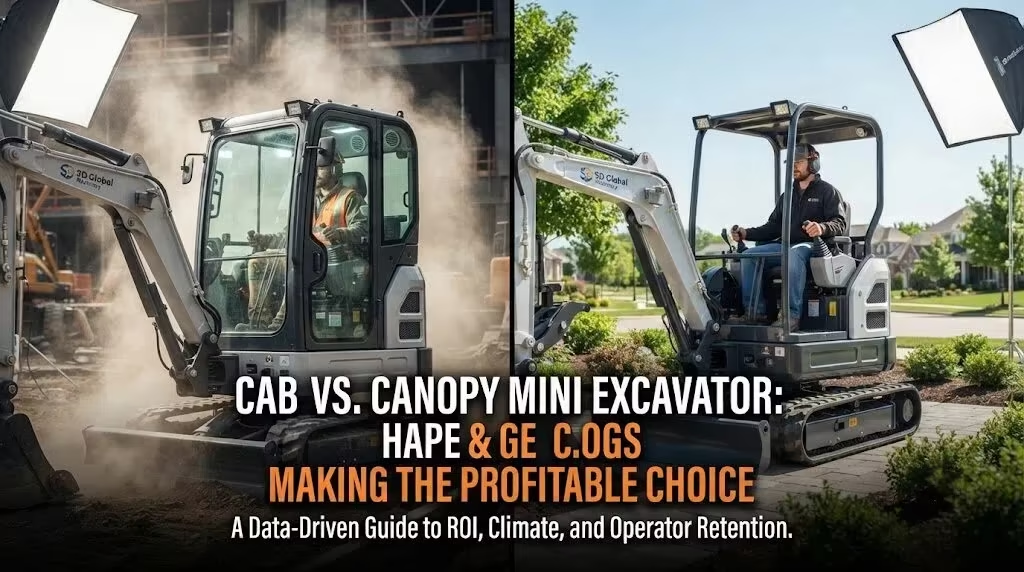
When you are spec’ing out a mini excavator, the choice between a cab and a canopy is often the first major fork in the road. It isn’t just a comfort option—it dictates your daily operational costs, the type of labor you can attract, and how quickly you can move the machine through tight site logistics.
If you are looking at current mini excavator trends, you will notice that the market is shifting. Operators are increasingly demanding better environmental control, yet there is still a massive segment of the industry where the “no-frills” canopy configuration is the superior business choice.
Table of Contents
When the Mini Excavator Cab is the Right Investment
The primary reason to opt for a cab configuration is to maintain productivity during the extremes. It is not just about keeping the operator warm; it is about keeping them on the seat.
1.Environmental Extremes and Operator Retention
In regions with harsh winters or extreme summers, an open canopy is a production killer. According to OSHA requirements for Roll-Over Protective Structures (ROPS) and Falling Object Protective Structures (FOPS), operator safety is non-negotiable regardless of the configuration. However, a cab provides the necessary HVAC system to manage internal temperatures. If your operator is struggling against 35°C heat or freezing winds, their focus drops, which directly impacts the precision of the work.
2.Dust and Noise Mitigation
If your work involves demolition, dry-cutting, or operating in high-dust environments like quarries, a canopy is effectively a liability. An enclosed cab with a pressurized, filtered HVAC system prevents fine silica dust and debris from entering the operator space. NIOSH research emphasizes that controlling exposure to hazardous dust is critical for long-term operator health. Furthermore, the sound dampening provided by a factory-sealed cab significantly reduces fatigue over an 8-hour shift compared to an open station.
Choosing the Canopy for Agility and ROI
The mini excavator canopy remains a staple for a reason. In many project scenarios, adding a cab isn’t just an extra cost—it’s a hindrance.
1.Unmatched Visibility
For jobs involving precision landscaping, utility laying, or working close to existing structures, your operator needs to see exactly where the track meets the ground. A canopy removes the “blind spots” created by pillars, door frames, and tinted glass. Equipment experts at the Construction Equipment Guide frequently note that while enclosed cabs have improved their sightlines, they rarely match the 360-degree awareness afforded by an open station.
2.Transport and Height Restrictions
This is often overlooked during the purchase phase but is a nightmare during logistics. A cab increases the transport height of the machine. If you are frequently moving between jobsites that have low-clearance tunnels, bridges, or warehouse access, that extra height can force you to use a different trailer or take longer routes. A canopy-configured machine is generally lower and easier to squeeze into tight transport configurations.
3.Lower Acquisition and Maintenance Costs
Let’s talk about the math. A cab configuration adds significant cost to the initial purchase price. If you are operating a rental fleet or doing short-term contract work where the machine is exposed to constant risk of glass breakage (e.g., in a dense, tight-quarter demolition zone), a canopy configuration is a safer bet. Replacing a shattered door or side window on a cab is expensive and requires downtime. With a canopy, if you hit a tree branch or a piece of debris, you are generally just looking at a dented guard, not a bill for specialized safety glass.
| Factor | Cab | Canopy |
| Initial Cost | High (Includes HVAC/Glass) | Low |
| Operator Comfort | Superior (Temp/Dust/Noise) | Basic |
| Visibility | Moderate (Frame obstructions) | Excellent |
| Maintenance | Higher (Seals/Glass/HVAC) | Lower (Minimal) |
| Transport Height | Tall | Low |
Note: For used mini excavators, the maintenance cost of a cab is a major factor. Old seals and damaged HVAC systems are common failure points.
Strategic Considerations for Different Buyers
Your choice of configuration depends heavily on your business model.
For Rental Companies:
Canopies are often preferred because they survive the “rental abuse” better. The lack of glass makes them cheaper to maintain, and they are easier to transport for your customers who might have height limitations on their own trailers.
For Full-Time Contractors:
If your operator is in the machine for 8+ hours a day, the cab is an investment in retention. It is hard to find skilled operators, and providing them with a cab that shields them from the elements is a competitive advantage in hiring.
Dealing with Tight Spaces:
If your work environment is extremely tight, do not just focus on the cab vs. canopy debate; focus on the machine geometry. A zero-tail swing design in a canopy configuration is essentially the “gold standard” for urban utility work, where visibility and tight rotation are the two biggest production variables.
Final Thoughts
The decision to invest in a mini excavator cab versus a canopy should be driven by your local climate, your specific project type, and your equipment turnover strategy.
Before you finalize your order, look at your longest job from the last year. If your operator was struggling with the weather or the environment, that is your signal. Don’t base your choice on what the machine looks like on the dealer’s lot; base it on what it will look like two weeks into a grueling project.
FAQ
Can I convert a canopy machine to a cab later?
Generally, no. Factory-installed cabs integrate HVAC routing, wiring, and structural mounting points that are extremely difficult and expensive to retrofit. If you think you need a cab, buy it with the cab.
Which configuration has better resale value?
In North American and European markets, the cab configuration typically holds value better because the demand for operator comfort is higher. In tropical or developing markets, a canopy is often more liquid and easier to sell.
Does a cab affect machine weight?
Yes. The cab, glass, and climate control system add weight. Ensure your towing vehicle and trailer capacity are rated for the heavier cab configuration to stay legal on the road.