Used excavator shipping from China is usually decided by one thing first: the machine’s real size after preparation. Price matters, but the cheapest freight quote can become expensive if the excavator does not fit, needs unexpected dismantling, gets delayed at port, or arrives with missing parts.
This guide explains when to use container shipping, flat rack shipping, or bulk cargo for a used excavator. It also covers dismantling, loading, Chinese ports, export documents, transport risks, and delivery time, so overseas buyers can ask better questions before paying the balance.
Table of Contents
What Is the Best Way to Ship a Used Excavator from China?
The best shipping method depends on machine size, operating weight, height, width, destination port, and how much dismantling the buyer accepts.
For small excavators, container shipping may work well. It gives better protection and is easier to manage on many shipping routes.
For medium-sized machines that are too wide or too tall for a closed container, flat rack shipping is often more practical.
For large excavators, bulk cargo, breakbulk, or Ro-Ro may be the better route, depending on vessel availability and port handling conditions.
| Shipping Method | Best For | Main Advantage | Main Concern |
|---|---|---|---|
| Container | Mini or partly dismantled excavators | Better weather and handling protection | Dismantling and reassembly |
| Flat Rack | Oversized small or medium machines | Easier loading than a closed container | Lashing and weather exposure |
| Bulk Cargo / Ro-Ro | Large used excavators | Better for heavy equipment | Vessel schedule and port handling |
The IMO CTU Code gives guidance on packing and securing cargo transport units across sea and land transport. For excavators, this matters because poor loading, wrong dimensions, or weak securing can cause damage long before the machine reaches the destination port.
Can a Used Excavator Fit in a Container?
A used excavator can fit in a container only when the machine size allows it, or when key parts are removed.
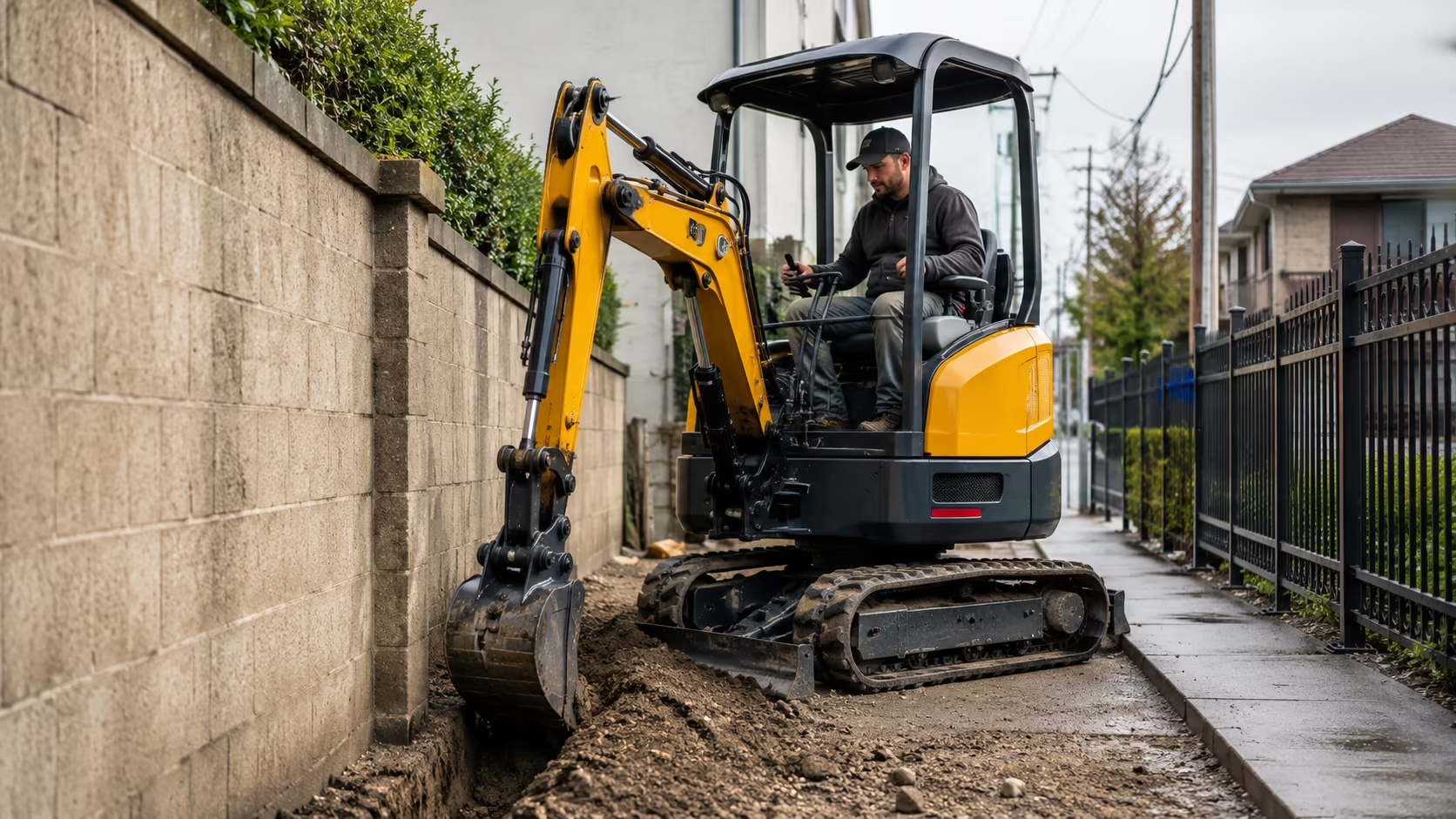
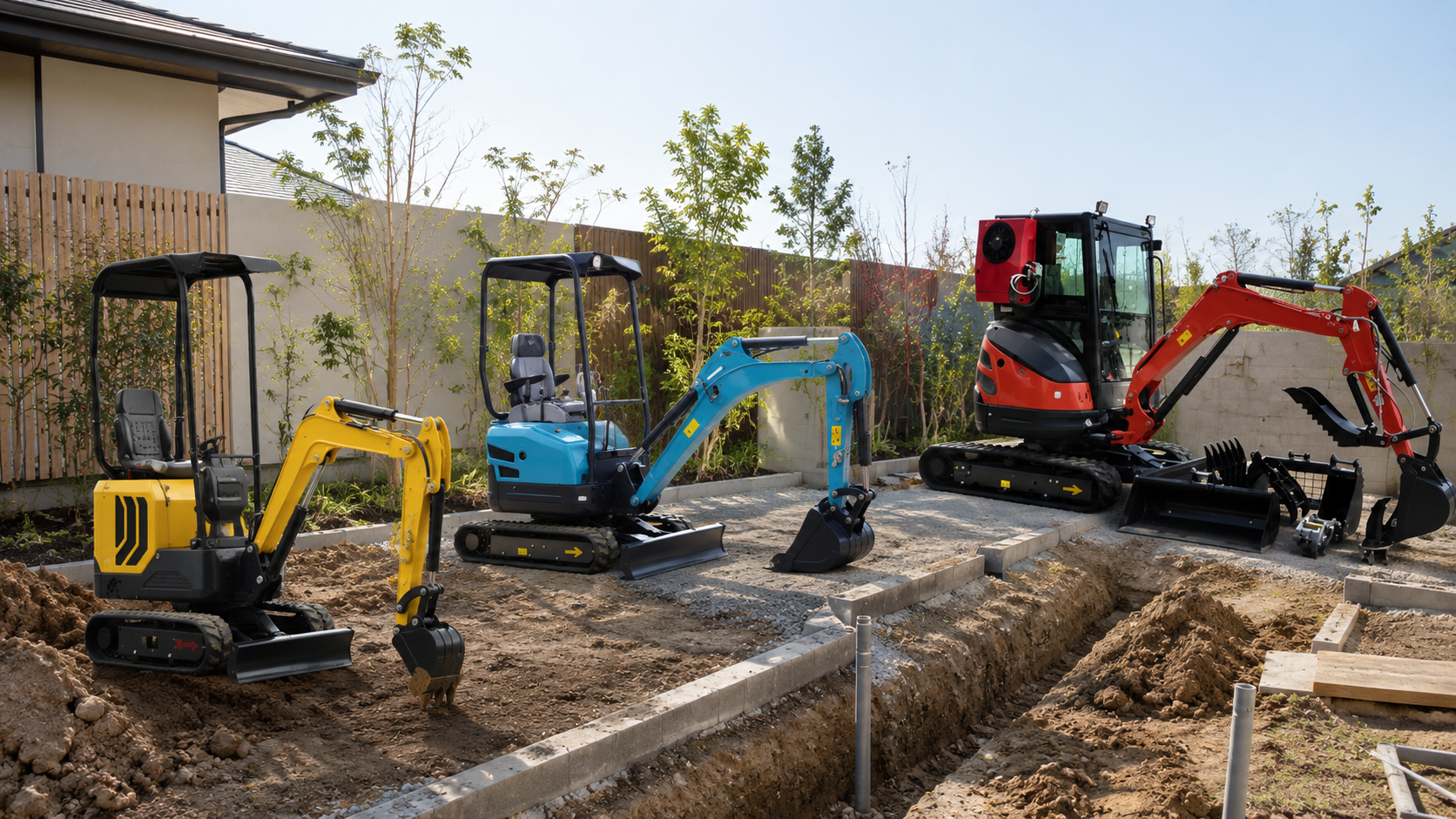
Mini excavators are the easiest case. Some 1-ton to 3.5-ton machines may fit into a container with limited preparation. Larger machines may need the bucket, arm, boom, cabin top, counterweight, or exhaust parts removed.
The usual question is not only “Can it fit?” but also:
- How much dismantling is needed?
- Can the supplier record every removed part?
- Will reassembly be easy at destination?
- Does dismantling create extra labor cost?
- Is the machine still safe to load after removal?
A 40HQ container is often discussed for used construction machinery, but the exact internal size and payload must be checked with the freight forwarder before booking. The Maersk special cargo equipment page shows how container type, dimensions, and payload limits affect out-of-gauge cargo planning.
Container shipping is not always cheaper. If too many parts must be removed, the lower ocean freight may be offset by dismantling, reassembly, inland transport, and higher handling risk.
When Does Flat Rack Shipping Make More Sense?
Flat rack shipping makes sense when the excavator is too high or too wide for a closed container but still suitable for container vessel transport.
This method is often used when:
- dismantling would take too much work;
- loading and unloading need to be easier;
- the destination port can handle flat rack cargo;
- the buyer wants the machine shipped as one larger unit.
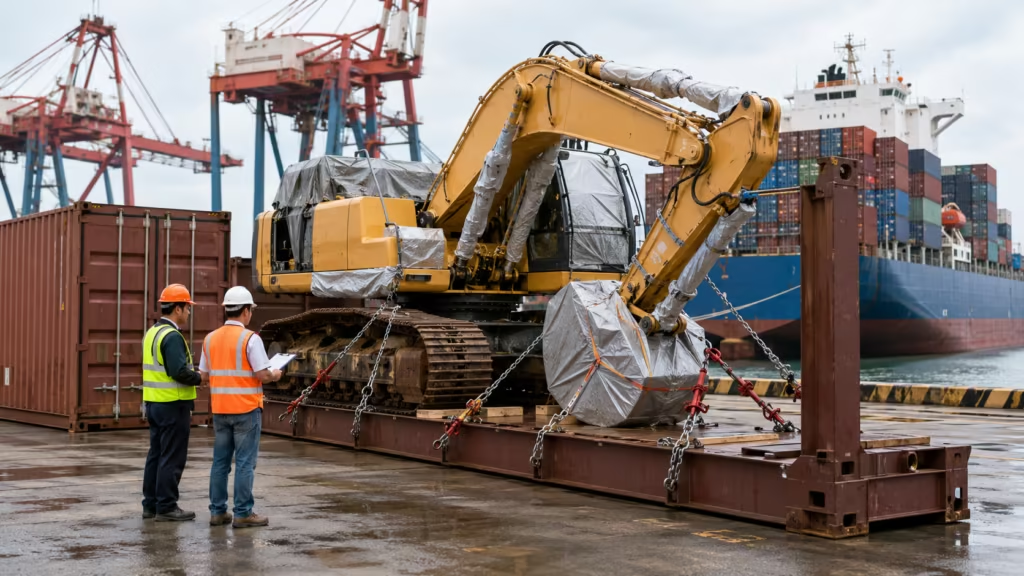
A flat rack has no side walls and no roof, so the excavator is more exposed than in a closed container. That means lashing, blocking, rust prevention, and weather protection need more attention.
The Maersk out-of-gauge cargo guide points out practical issues such as declared dimensions, lashing protrusions, and cargo shifting during ocean transport. That is exactly why buyers should ask for loading photos, lashing photos, and final dimension confirmation before the vessel departs.
Flat rack shipping is not chosen because it sounds “heavy duty.” It is chosen when the machine size, loading method, and route make it more sensible than forcing the excavator into a container.
Is Bulk Cargo Better for Large Used Excavators?
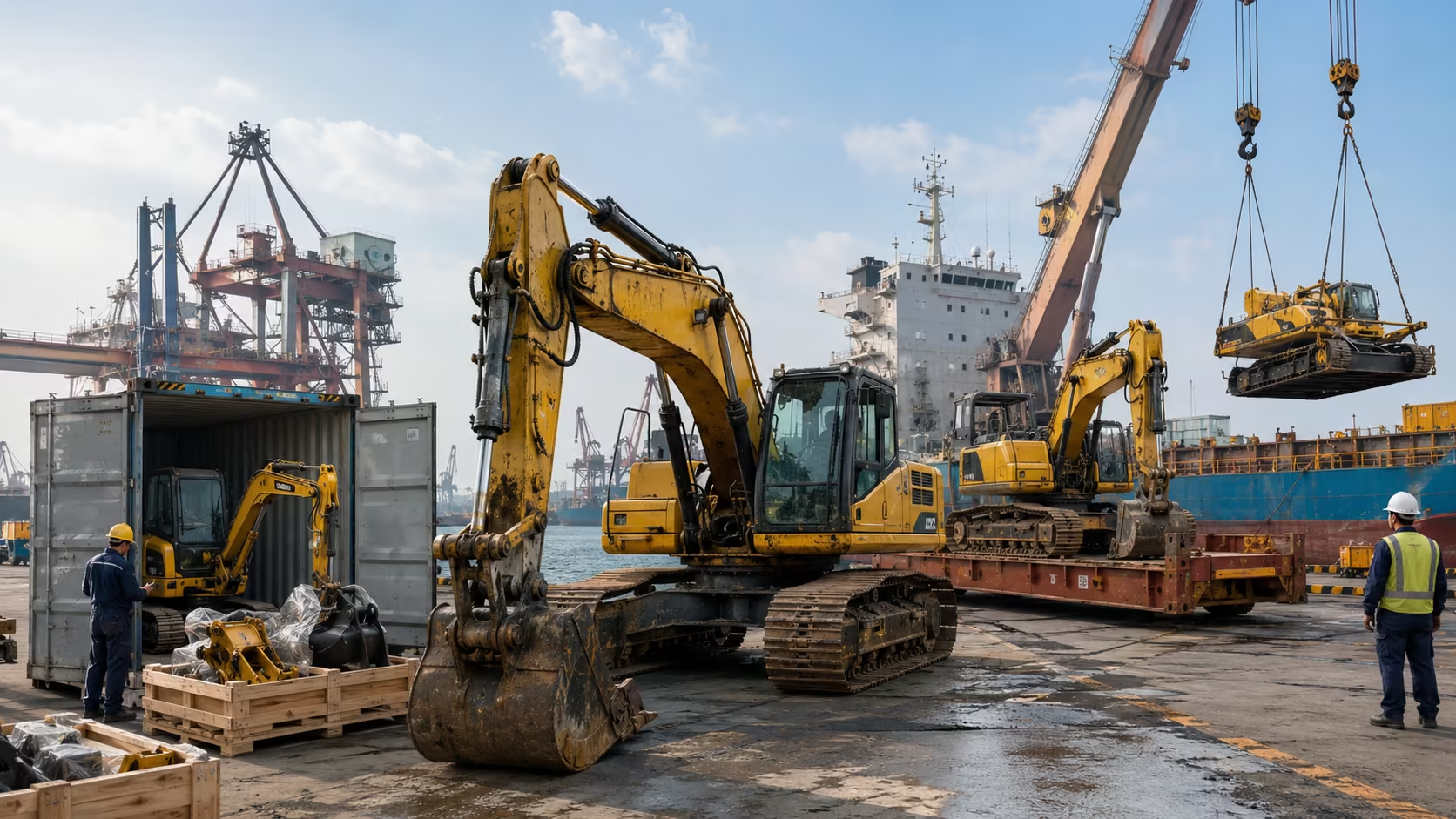
Bulk cargo or breakbulk shipping is often considered for large excavators that are too heavy or oversized for container or flat rack shipment.
This method may be more practical when:
- the excavator is large and difficult to dismantle;
- the route has suitable breakbulk vessel service;
- the port can lift or drive heavy equipment safely;
- the buyer ships multiple machines together;
- flat rack equipment is limited or too expensive.
Bulk cargo is not the same as Ro-Ro. Ro-Ro means the machine rolls on and rolls off the vessel, if the machine can move and the route supports that service. Breakbulk usually involves lifting or handling the cargo as a separate heavy unit.
The CMA CGM oversized cargo page explains that out-of-gauge and project cargo can use open-top, flat rack, or project cargo solutions depending on size and route. For used excavator shipping from China, this is why the final plan should be confirmed machine by machine, not guessed by model name alone.
What Parts May Need to Be Removed Before Shipping?
Dismantling depends on the excavator model and the shipping method. The goal is to reduce height, width, or length without creating avoidable reassembly problems.
Common parts that may be removed include:
- bucket;
- boom or arm;
- counterweight;
- cabin top or exhaust pipe;
- mirrors, lights, and loose accessories;
- batteries, depending on carrier rules;
- hydraulic attachments, if shipped together.
Buyers should ask for a dismantled parts list before shipment. Each removed part should be photographed, labeled, and included in the packing list.
This matters because many disputes are not caused by the machine itself. They happen because a bucket pin, hose, small panel, tool box, lamp, or attachment part was removed and not clearly recorded.
If you are still comparing suppliers, inspection points, and purchase risks before arranging shipment, this guide on buying used excavators from China can help you review the sourcing side first.
Which Chinese Ports Are Common for Used Excavator Export?
Used excavators may be exported through several Chinese ports. The right port depends on the supplier’s yard location, inland trucking cost, vessel route, destination country, and freight availability.
Common export ports may include:
- Shanghai;
- Qingdao;
- Tianjin;
- Ningbo;
- Guangzhou / Nansha;
- Shenzhen;
- Lianyungang.
The closest port is not always the best port. A farther port may have better vessel schedules, more flat rack availability, stronger heavy equipment handling experience, or lower total freight.
For overseas buyers, the better question is:
“Which port gives the best balance of inland trucking, vessel schedule, cargo handling, and final delivery time?”
Not just:
“Which port is nearest?”
What Documents Are Needed for Used Excavator Export from China?
Used excavator export from China needs clear documents because the cargo is high-value, heavy, and often partly dismantled.
Typical documents include:
| Document | Why It Matters |
|---|---|
| Commercial invoice | Shows transaction value and buyer/seller details |
| Packing list | Lists machine, accessories, and removed parts |
| Bill of lading | Main shipping document for ocean transport |
| Export declaration | Used for China export clearance |
| Certificate of origin | May support import customs review |
| Sales contract | Confirms payment terms and responsibility |
| Inspection photos/videos | Proves condition before shipment |
| Insurance policy | Covers transport damage risk if purchased |
The U.S. International Trade Administration Incoterms guide explains that Incoterms define seller and buyer responsibilities in an export transaction. This is important for used construction machinery because buyers should know who is responsible for inland transport, port charges, export clearance, freight, insurance, and destination costs.
For example, FOB, CIF, and CFR can lead to very different responsibilities. Do not only compare machine price. Compare the trade term and what is included in the quotation.
What Are the Main Risks During Used Excavator Shipping?
Used excavator shipping from China has several predictable risks. Most can be reduced if the buyer checks the loading plan before departure.
The main risks are:
1.Wrong dimensions before booking:If the machine height, width, or weight is wrong, the container or flat rack booking may fail.
2.Poor dismantling records:Removed parts can be lost, mixed, or packed without clear labels.
3.Weak lashing:A machine can shift during inland transport or sea transport if it is not secured properly.
4.Hydraulic leakage:Leaks should be checked before loading, especially if the machine is shipped in a container.
5.Rain and seawater exposure:Flat rack and bulk cargo need weather protection for cabin, electrical parts, exposed cylinders, and vulnerable components.
6.No condition proof:Without photos and videos before loading, it is hard to prove when damage happened.
7.Customs or document delay:Missing invoice details, wrong HS information, unclear parts list, or inconsistent serial numbers can slow clearance.
Before paying the final balance, ask for these records:
- serial number photo;
- engine plate or machine plate photo;
- full machine walkaround video;
- working video;
- dismantled parts photo;
- loading photo;
- lashing photo;
- container number or cargo booking detail;
- final bill of lading draft.
How Long Does Used Excavator Shipping from China Take?
Delivery time is not only ocean transit time. It includes preparation before the machine even reaches the vessel.
The total timeline may include:
- final machine inspection;
- payment confirmation;
- dismantling work;
- inland trucking to port;
- container or flat rack booking;
- customs declaration;
- port cut-off time;
- vessel departure;
- ocean transit;
- destination port unloading;
- import customs clearance;
A small machine shipped by container may be quicker to schedule on some routes. A large excavator shipped by bulk cargo may wait longer for suitable vessel space.
Buyers should ask for a realistic timeline in three parts:
1.preparation time before loading;
2.estimated vessel transit time;
3.destination port and customs time
If a supplier only says “about 30 days,” ask whether that means ocean transit only or the full process from yard to destination port.
How Should Buyers Choose Between Container, Flat Rack, and Bulk Cargo?
The best choice is the one that controls total cost and risk, not just the one with the lowest freight quote.
Use this decision table before confirming used excavator shipping from China:
| Buyer Question | Usually Better Option |
|---|---|
| Is the excavator small enough after simple preparation? | Container |
| Is the machine too wide or tall for a container? | Flat Rack |
| Is the excavator large and heavy? | Bulk Cargo or Ro-Ro |
| Is weather protection the main concern? | Container |
| Is less dismantling more important? | Flat Rack |
| Is the destination port suitable for heavy equipment? | Flat Rack or Bulk Cargo |
| Are several machines shipped together? | Bulk Cargo may be practical |
A lower container quote may still be the wrong choice if the machine needs heavy dismantling. A flat rack may look more expensive but save time and reduce reassembly work. Bulk cargo may be the only practical option for large excavators, but it requires more attention to route, port handling, and loading records.
What Should Buyers Confirm Before Paying the Balance?
Before the final payment, buyers should confirm more than the machine price.
Ask for:
- final machine photos;
- machine working video;
- serial number and model plate photo;
- exact machine dimensions after preparation;
- shipping method;
- port of loading;
- destination port;
- dismantling list;
- packing list draft;
- cargo insurance option;
- estimated vessel schedule;
- loading and lashing photo plan.
This step is simple, but it prevents many problems. Once the machine is loaded, correcting missing parts, wrong documents, or unclear shipping responsibility becomes much harder.
Final Check Before You Ship
Used excavator shipping from China should not be decided by freight price alone. Check the machine size, shipping route, dismantling plan, port handling ability, export documents, loading records, insurance, and delivery schedule.
A buyer who confirms these details before shipment has a much better chance of receiving the machine on time, with the right parts, fewer disputes, and a clearer total cost.
FAQ
Can a used excavator be shipped in a container?
Yes, if the excavator is small enough or can be safely dismantled to fit. Mini excavators are easier. Larger machines may need flat rack or bulk cargo.
Is flat rack shipping safe for used excavators?
Yes, if the machine is correctly lashed, blocked, protected from weather, and photographed before departure. Poor securing is the main risk.
How much does it cost to ship a used excavator from China?
Cost depends on machine size, weight, shipping method, loading port, destination port, dismantling work, inland trucking, insurance, and vessel availability.
Do excavators need to be dismantled before shipping?
Sometimes. Buckets, booms, arms, counterweights, cabin parts, exhaust pipes, or accessories may be removed to reduce shipping size.
What documents are needed to export a used excavator from China?
Common documents include commercial invoice, packing list, bill of lading, export declaration, certificate of origin, sales contract, inspection photos, and insurance documents.
Which shipping method is cheaper: container or flat rack?
Container freight may be lower, but dismantling and reassembly can add cost. Flat rack may cost more in freight but can reduce dismantling work.
How long does used excavator shipping from China take?
It depends on preparation time, loading port, vessel schedule, shipping route, destination port, and customs clearance. Ask whether the quoted time includes preparation or only ocean transit.